 Sodate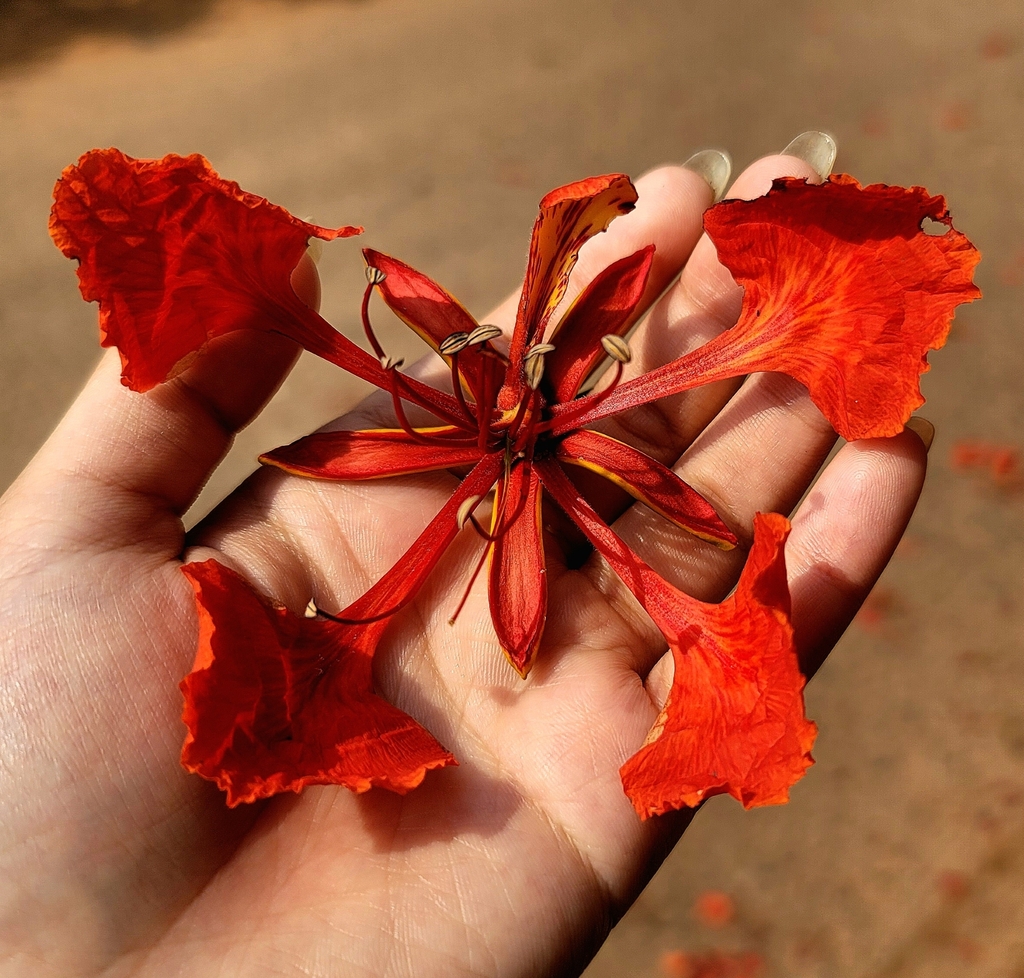
On this page
Gulmohar is one of the fastest routes to a spectacular flowering shade tree in a hot climate: plant it in full sun with room for a 10m-wide umbrella crown and it will bloom scarlet every May-June. Its two real flaws are brittle wood that snaps in storms and aggressive surface roots that lift pavements, so keep it well away from buildings, drives, and power lines. Saplings cost ₹40-₹200 in India.
Key facts
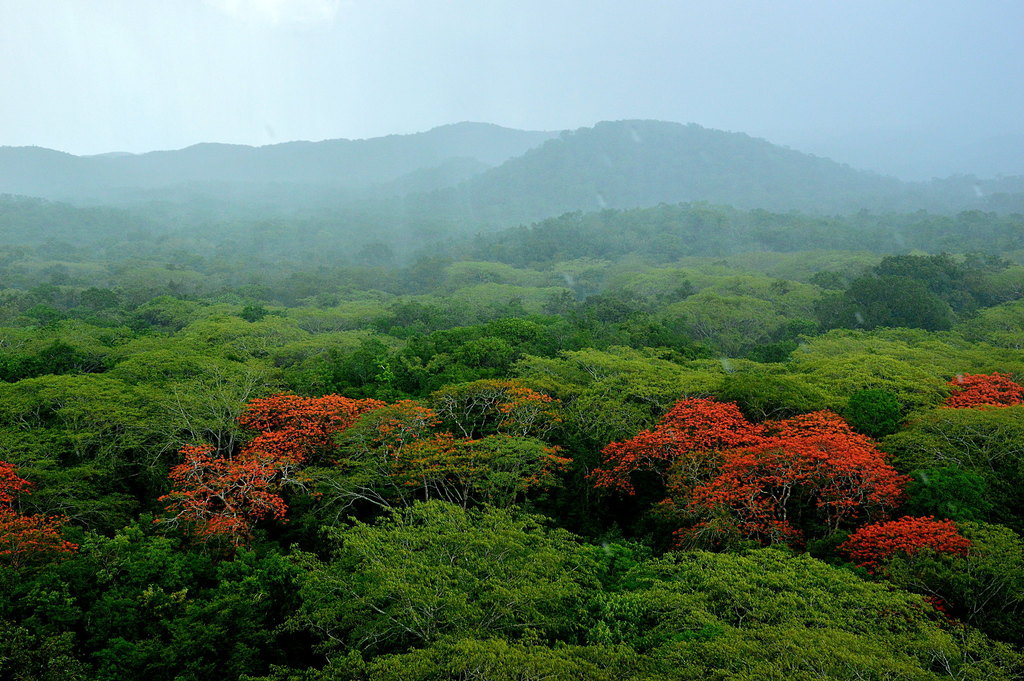
- Native to the dry deciduous forests of Madagascar, where it is actually endangered in the wild. Yet planted in the millions across India, Southeast Asia, and the tropics as a street and avenue tree.
- Blooms just before or with the first monsoon flush in India (May-June), covering the entire crown in scarlet-orange flowers before the feathery leaves fully return.
- The wood is notoriously brittle: whole limbs shear off in pre-monsoon squalls and cyclonic winds, which is why city forestry departments increasingly avoid it near roads.
- Shallow, aggressive surface roots lift pavements, drives, and compound walls. Allow at least 6-8m clearance from any structure.
Care requirements#
| Plant type | Outdoor deciduous/semi-deciduous flowering tree |
| Growing medium | Any free-draining soil; tolerates poor, sandy, and slightly alkaline soils |
| Light needs | Full sun. Flowering is poor in any shade |
| Watering (establishment) | Deep soak weekly for the first 1-2 years |
| Watering (mature) | Rain-fed; a dry spell before flowering actually improves bloom |
| Temperature range | Thrives 20-40°C; damaged below 5°C, killed by frost |
| Fertilizer | Little needed; low-nitrogen feed only. Excess nitrogen gives leaves at the expense of flowers |
| Soil pH | 5.5-7.5 |
| Spacing | 6-8m minimum from buildings, walls, drives, and drains (surface roots) |
| Planting time | Start of monsoon (June-July) in India; spring in other tropical regions |
| Hardiness zone (outdoor) | USDA 10b-12 |
| Toxicity | Not significantly toxic; large seeds are a choking hazard and mildly unsafe if chewed in quantity by pets |
Growth & propagation#
| Mature size | 10-12m tall with an umbrella crown often wider than the tree is tall (10-15m) |
| Growth rate | Very fast. 1.5-2m a year when young |
| Time to first flowering | 4-6 years from seed; grafted or large saplings sooner |
| Propagation methods | Seed (scarify or soak in hot water first), semi-hardwood cuttings |
| Propagation difficulty | Easy from seed after scarification; untreated seed germinates slowly and erratically |
| Pruning needs | Annual post-monsoon pruning to build a strong branch structure and remove weak, storm-prone limbs |
Common problems & troubleshooting#
| Symptom | Likely cause | Fix |
|---|---|---|
| Large limbs snapped off after a storm | Inherently brittle wood plus a heavy, wide crown. Gulmohar's defining weakness | Prune to reduce crown sail before storm season, remove narrow-angled branches early, and never plant where a falling limb can hit a roof, car, or wire |
| Pavement, drive, or compound wall cracking near the trunk | Aggressive shallow surface roots | There is no fix once planted too close. Site new trees 6-8m from hard structures; root-barrier trenching gives only partial relief |
| Lots of leaf, few or no flowers | Too much shade, too much nitrogen, or a tree still juvenile (under 4-5 years) | Ensure all-day sun, stop nitrogen feeds, and wait. Mild pre-summer drought stress encourages bloom |
| Defoliation by hairy caterpillars | Loopers and tussock moth larvae flush on new monsoon growth | Healthy trees releaf quickly; spray neem oil only on young saplings that can't afford the loss |
| Sapling dies back in winter | Cold or frost. Gulmohar is strictly tropical | Only plant in frost-free climates; in marginal zones protect young trees or grow something hardier |
Get establishment watering right
Sodate reminds you through the critical first two summers, then tapers the schedule as your gulmohar becomes rain-fed.
Seasonal care#
Varieties & cultivars#
| Variety | Distinguishing trait | Note |
|---|---|---|
| Yellow gulmohar (D. regia var. flavida) | Pure golden-yellow flowers instead of scarlet | Uncommon; sold as grafted plants |
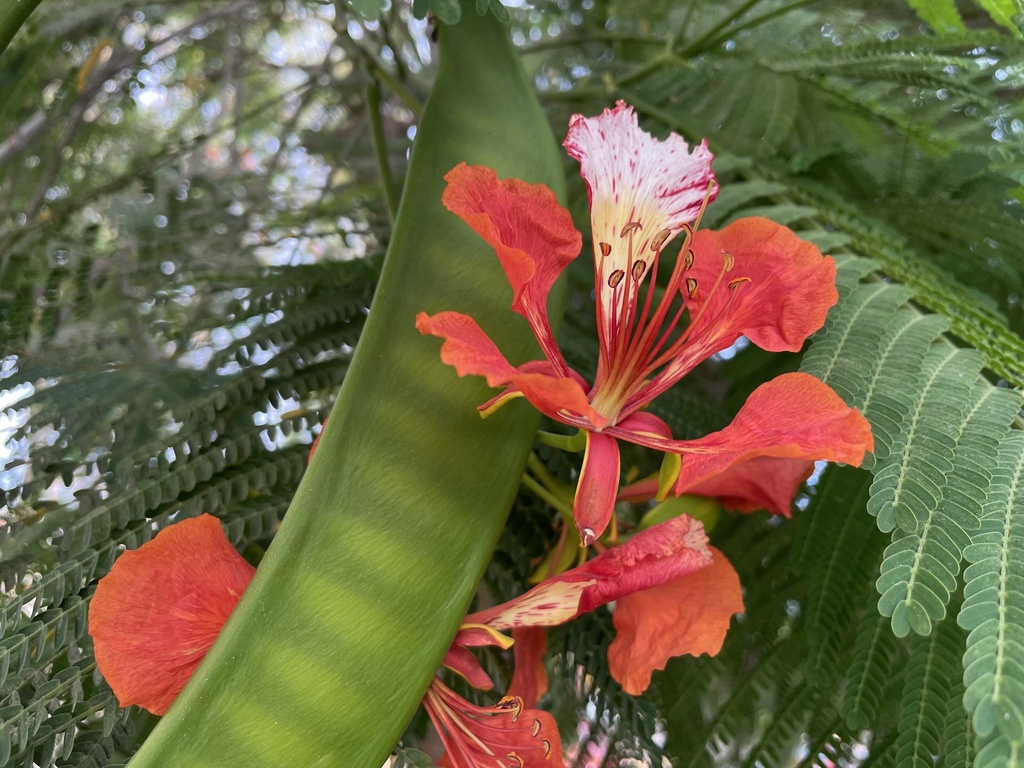
| Standard scarlet form | Orange-red flowers with one white-flecked 'standard' petal | The common street tree |
Buying checklist#
- Single straight leader with wide-angled branches. Narrow forks fail in storms later
- No circling roots in the polybag; rootbound saplings develop worse anchorage
- 60cm-1.2m sapling establishes faster and shapes better than an overgrown one
- Confirm scarlet vs yellow form if the colour matters. Seedlings are almost always scarlet
Pricing by region#
| Region | Price range | Typical unit | Basis |
|---|---|---|---|
| US | $25 – $70 | 3-7 gal pot | Florida/Hawaii tropical nurseries (sold as royal poinciana) |
| UK | $20 – $50 | young potted plant | Specialist online sellers (conservatory curiosity only) |
| India | $0.5 – $2.5 | polybag sapling | Local + government nurseries |
| Australia | $20 – $55 | potted sapling | Queensland/NT nurseries (poinciana) |
| Canada | $25 – $60 | potted plant | Online tropical specialists (greenhouse only) |
USD figures are approximate conversions for comparison; switch the dropdown to see each region's actual local-currency listing price.
Often confused with#
Name confusion warning#
One tree, many names. Gulmohar (India), royal poinciana (US), flamboyant (Caribbean/Africa), flame tree and poinciana (Australia) are all Delonix regia. But "flame tree" also refers to the unrelated Australian Brachychiton acerifolius, and "dwarf gulmohar" is the shrub Caesalpinia pulcherrima. Check the botanical name when buying.
Where it's actually grown#
Almost all gulmohar stock is seed-grown; Indian state and municipal nurseries raise huge quantities for avenue planting, while US supply comes from south Florida and Hawaii tropical growers selling it as royal poinciana.
Import & biosecurity restrictions#
| Region | Note |
|---|---|
| Australia | Live plant imports restricted under biosecurity law; widely grown domestically in Queensland and the NT as poinciana. |
| US | No federal restriction; outdoor-hardy only in zones 10b-12 (south Florida, Hawaii, coastal south Texas). |
| UK | No restriction, but it cannot flower or survive outdoors. A conservatory foliage curiosity at best. |
| India | Ubiquitous and unrestricted, though some municipalities now limit new roadside planting because of storm limb-drop. |
| Canada | CFIA phytosanitary rules apply to imports; strictly a greenhouse plant. |
Similar plants
Ranked in these guides
Did you know?
Frequently asked questions
Why is gulmohar considered risky near houses?
Two reasons: its brittle wood sheds large limbs in storms, and its shallow surface roots lift pavements, drives, and walls. Keep it at least 6-8m from any structure.
How long does a gulmohar take to flower?
Usually 4-6 years from seed; buying a larger sapling or grafted plant shortens the wait.
Can gulmohar grow outside the tropics?
Only in frost-free climates (USDA 10b-12); a single frost kills young trees, and it won't bloom without months of real heat.
Is gulmohar native to India?
No. It's native to Madagascar, where it's endangered in the wild. It was introduced to India in the 1800s and has become the country's signature flowering avenue tree.
How much does a gulmohar sapling cost?
₹40-₹200 from Indian nurseries; in the US expect $25-$70 for a potted royal poinciana from tropical growers.