 Sodate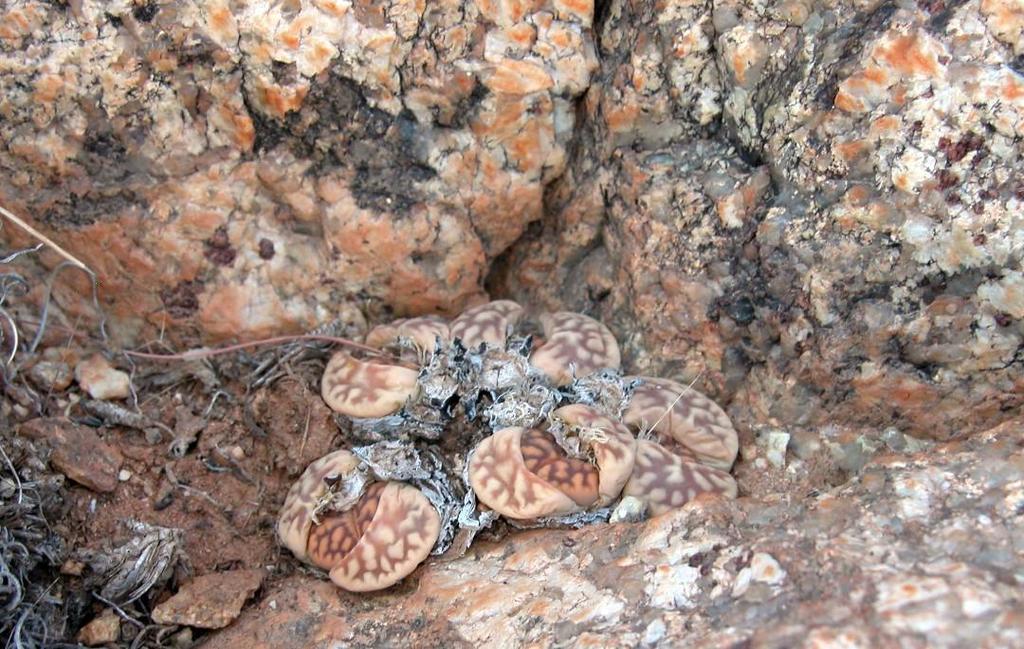
On this page
The entire skill of lithops is NOT watering. Water modestly in spring and autumn only, stop completely in summer (dormancy) and again from late autumn through spring while the old leaves shrivel to feed the new pair. A handful of waterings a year, in almost pure mineral grit, in the sunniest window you have. If in doubt, don't water. A wrinkled lithops recovers, a burst one doesn't. Pet-safe. $4-$15 each.
Key facts
- Native to the deserts of South Africa and Namibia, where the body sits nearly buried with only the translucent 'leaf windows' exposed. Camouflage that fools grazing animals and collectors alike.
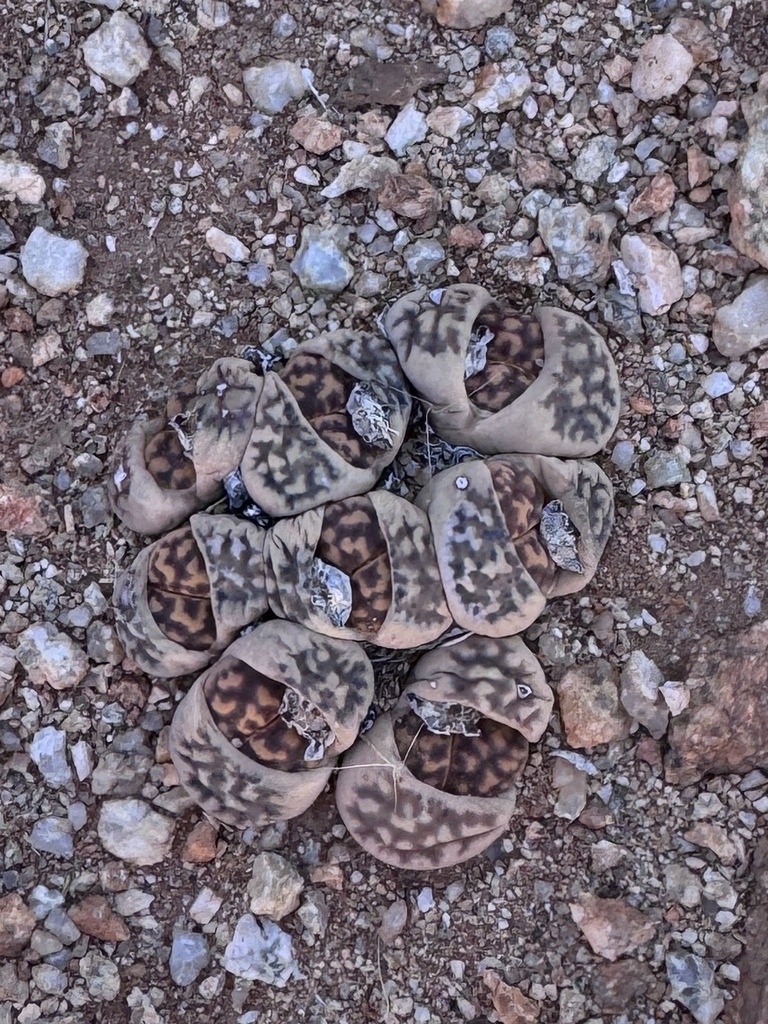
- The plant is just one pair of fused succulent leaves; each year a new pair grows by absorbing the old pair from the inside.
- Watering during the leaf change or summer dormancy is the classic kill: the plant takes up water it can't use and the leaves split or rot.
- Rain in habitat can be under 100mm a year; some populations survive largely on fog and dew.
- Non-toxic to cats and dogs.
Care requirements#
| Plant type | Indoor windowsill succulent (outdoors year-round only in near-desert USDA 10-11 climates) |
| Growing medium | Almost pure mineral grit: 80-90% pumice/coarse sand/perlite with minimal organic matter. Standard cactus mix is still too rich |
| Light needs | 4-5+ hours of direct sun (south window in the northern hemisphere); shade-grown lithops stretch and lose their camouflage colors |
| Watering: the core rule | Water only when the body wrinkles, and only in the active seasons; roughly 4-6 waterings per YEAR total |
| Autumn (flowering season) | Water modestly when wrinkled. This is peak growth and bloom time |
| Winter–spring (leaf change) | NO water at all while the old leaf pair shrivels to feed the new one. The plant lives off the old leaves |
| Summer (dormancy) | NO water; most lithops deaths are summer waterings of a dormant plant |
| Drainage | Absolute: deep pot (roots are long taproots), drainage hole, gritty top dressing |
| Humidity | Low; never mist |
| Temperature range | 18-32°C (65-90°F) growing; keep above 5°C (40°F) and bone dry in winter |
| Fertilizer | Essentially none: at most a whisper of dilute low-nitrogen feed in autumn |
| Toxicity | Non-toxic to cats, dogs, and humans |
Growth & propagation#
| Mature size | 1-4cm across per head; clumps add heads slowly over years |
| Growth rate | Very slow. Seed to flowering takes 3-5 years |
| Annual cycle | Autumn flower → winter-spring leaf change (old pair absorbed) → summer dormancy |
| Bloom | A single white or yellow daisy-like flower from the leaf fissure in autumn, often larger than the plant |
| Propagation methods | Seed (slow but standard); division only of multi-headed clumps |
| Propagation difficulty | Seed is easy to germinate, hard to keep alive the first year |
Common problems & troubleshooting#
| Symptom | Likely cause | Fix |
|---|---|---|
| Body turns mushy, translucent, and collapses | Watered during dormancy or leaf change, fatal overwatering | Rarely recoverable; remove from wet soil immediately and let dry, then adopt the seasonal calendar so it never recurs |
| Leaves split open with ugly ruptures | Too much water taken up at once during active growth | Splits heal into scars; water smaller amounts and only when visibly wrinkled |
| Plant stretches tall and soft with faded pattern | Insufficient direct sun (etiolation) | Move to the sunniest window gradually; stretched growth never shrinks, but next year's leaf pair will be compact |
| Old leaves won't shrivel; new pair stalls inside | Watering during leaf change keeps the old pair plump, 'stacking' the plant | Withhold all water until the old pair is fully papery. Even if it takes months |
| Wrinkled and soft in autumn despite watering | Rotted taproot from earlier overwatering, or mealybugs at the root crown | Unpot and inspect: trim rot back to firm tissue, dust with sulfur, and re-root in dry grit; treat mealybugs with 70% alcohol |
The plant you mostly must NOT water
Sodate can hold long no-water windows for dormant plants. So lithops gets silence in summer and a nudge only in its short growing windows.
Seasonal care#
Varieties & cultivars#
| Variety | Distinguishing trait | Note |
|---|---|---|
| L. karasmontana 'Top Red' | Vivid red-brown facial pattern | Popular selected form of this species |
| Lithops aucampiae | Large terracotta-brown heads, more forgiving | Often recommended as a first lithops |
| Lithops lesliei 'Albinica' | Yellow-green body, white flower | Classic collector cultivar |
| Lithops optica 'Rubra' | Entirely ruby-red body | Striking but less forgiving of wet cold |
Buying checklist#
- Body is firm and sits low and fat. Avoid tall, stretched plants (light-starved stock)
- No soft, translucent, or smelly patches at soil level
- Ask when it was last watered. Well-run sellers keep them nearly dry
- Prefer plants in gritty mineral mix; peat-grown lithops need immediate repotting
Pricing by region#
| Region | Price range | Typical unit | Basis |
|---|---|---|---|
| US | $4 – $15 | single head, 2in pot | Succulent nursery + online |
| UK | $4 – $13 | single head | Garden centre + specialist |
| India | $2 – $7 | single head | Online succulent sellers |
| Australia | $5 – $16 | single head | Succulent nurseries |
| Canada | $5 – $15 | single head | Succulent specialist + online |
USD figures are approximate conversions for comparison; switch the dropdown to see each region's actual local-currency listing price.
Often confused with#
Where it's actually grown#
Virtually all trade lithops are greenhouse seed-raised, big producers in South Korea, China, the Netherlands, and California turn out millions annually, since wild collection is illegal in South Africa and Namibia and habitat plants are slow and protected.
Import & biosecurity restrictions#
| Region | Note |
|---|---|
| US | No restriction on domestic sale; imported bare-root plants need phytosanitary certificates. |
| UK | No specific restriction beyond standard plant-import paperwork; widely available domestically. |
| Australia | Live plant imports restricted under biosecurity law; strong domestic succulent nursery supply. |
| India | No specific restriction; sold bare-root by online succulent sellers. Repot into pure grit on arrival. |
| Canada | CFIA permits required for commercial imports; seed imports are the common hobbyist route. |
Similar plants
Ranked in these guides
Did you know?
Frequently asked questions
How often should I water lithops?
Only 4-6 times a year: modestly in autumn and mid-spring when the body wrinkles, and never during summer dormancy or the winter-spring leaf change. When in doubt, don't.
Why is my lithops mushy?
It was watered while dormant or changing leaves, the fatal lithops mistake. A mushy, translucent body rarely recovers; a merely wrinkled one always can.
Are lithops safe for cats and dogs?
Yes, living stones are non-toxic to cats and dogs.
Why does my lithops look like it's splitting in two?
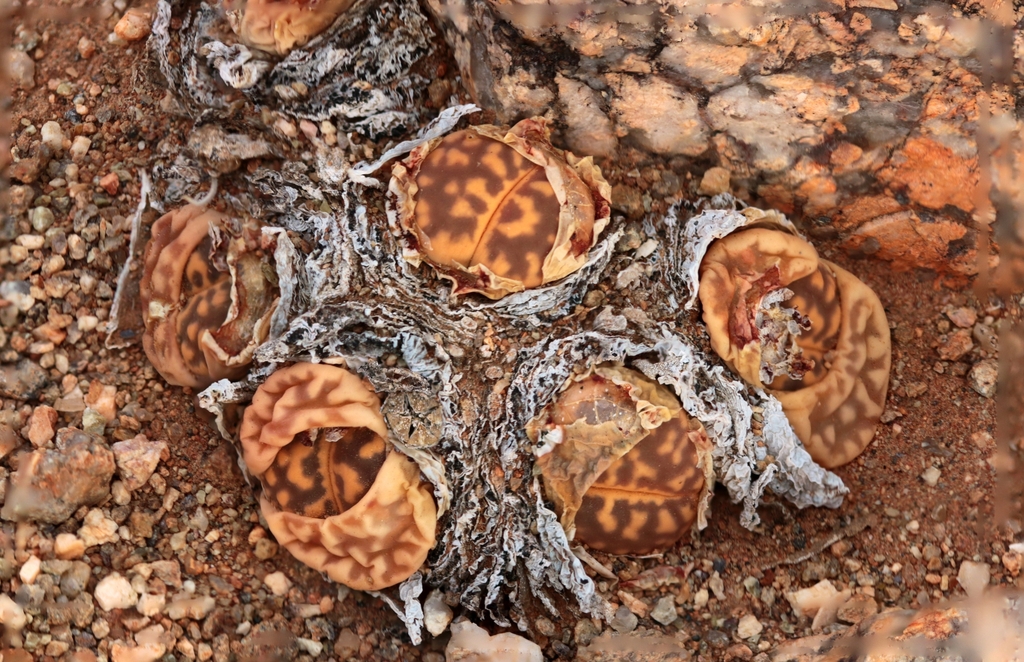
That's the annual leaf change: a new leaf pair emerges through the fissure while the old pair shrivels to feed it. Stop watering entirely until the old leaves are completely papery.
Do lithops flower?
Yes. A mature plant opens a white or yellow daisy-like flower from the central fissure in autumn, often as big as the plant itself.