 Sodate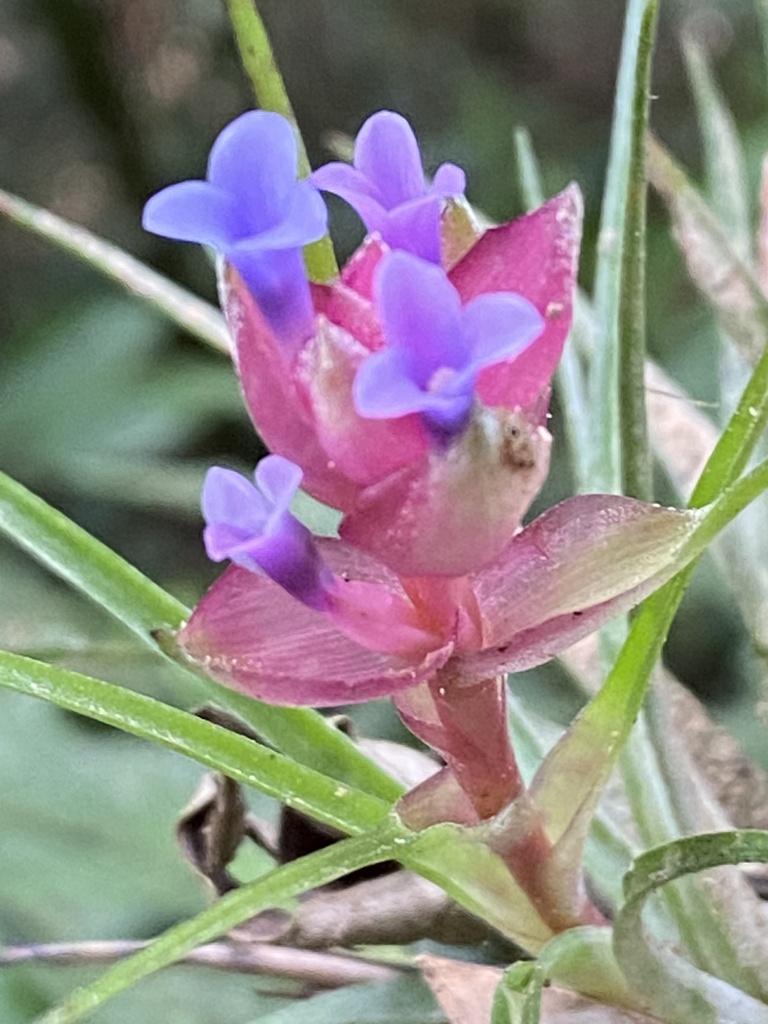
On this page
Stricta is one of the fastest and most forgiving air plants: bright indirect light, a 20-30 minute weekly soak, then shake and dry upside down so no water sits in the rosette. Unlike blushing species, it blooms with a distinct pink bract spike and blue flowers, and it clumps quickly from pups. Pet-safe. Typically $5-$12.
Key facts
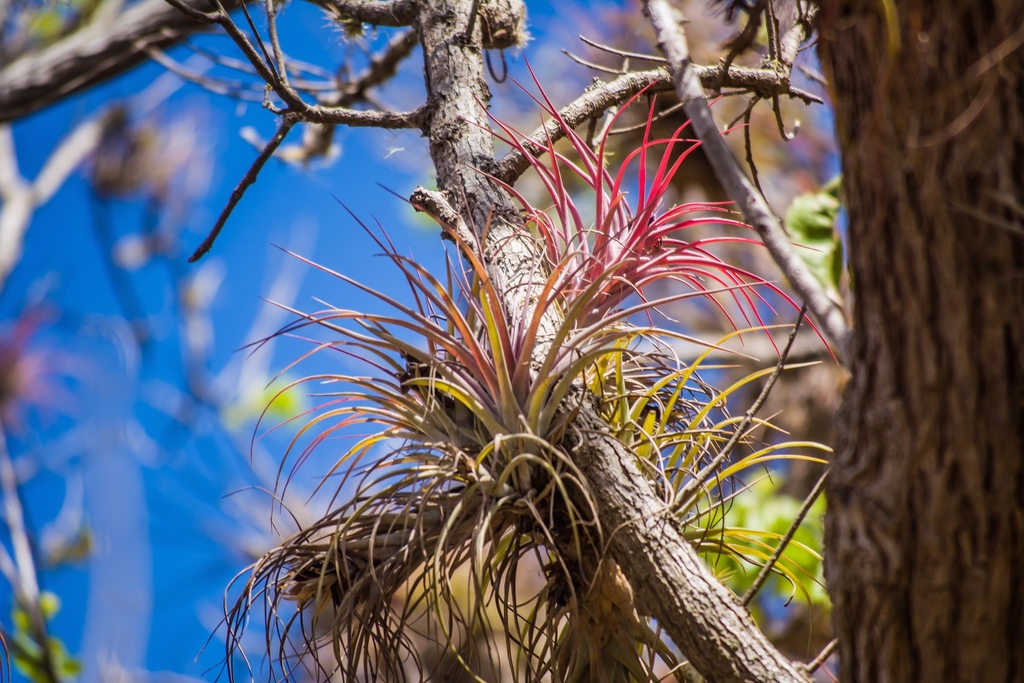
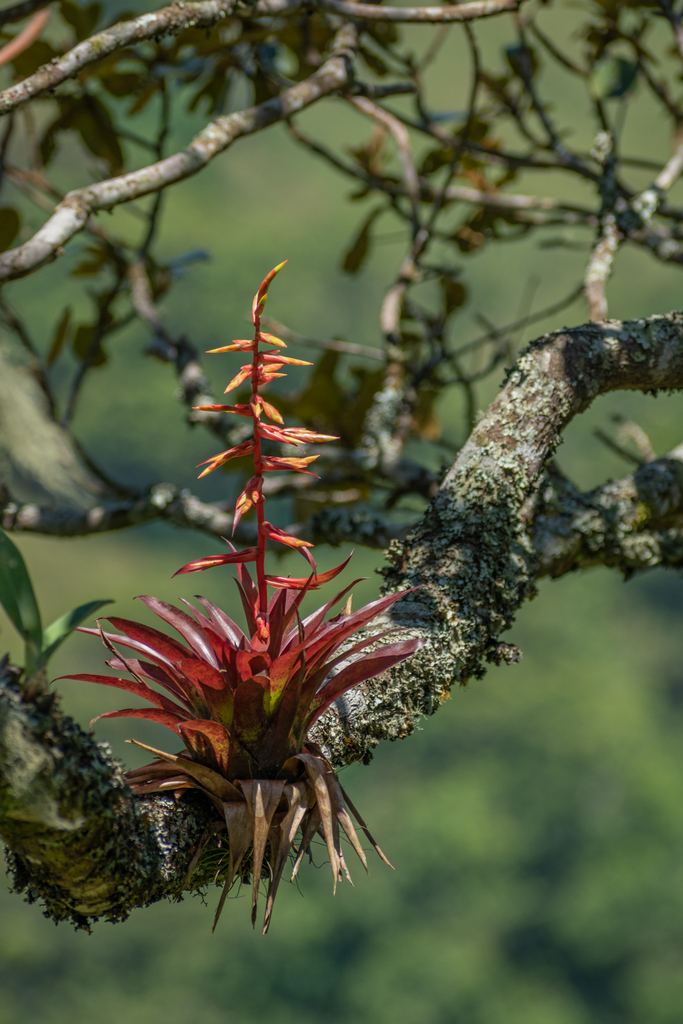
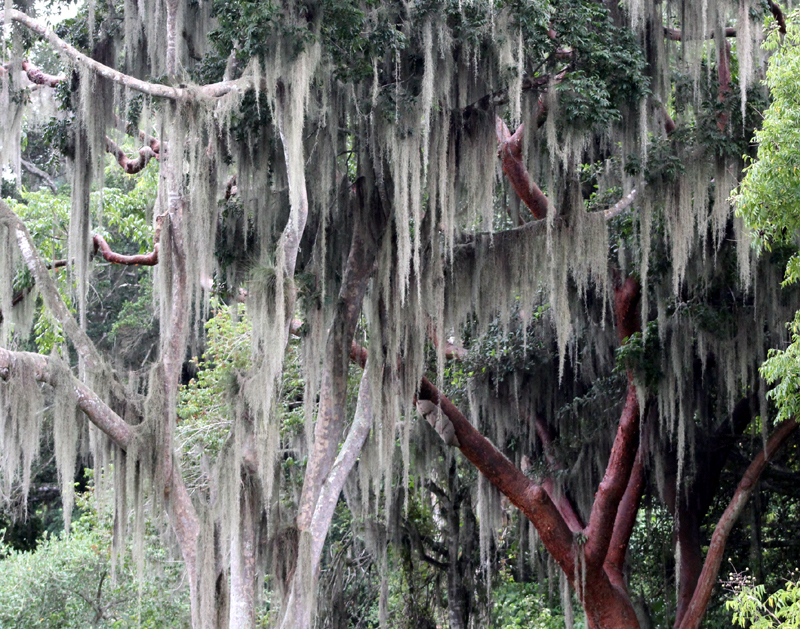
- Native to Brazil, Venezuela, Argentina, and nearby regions, from coastal restinga scrub to trees and even telephone wires.
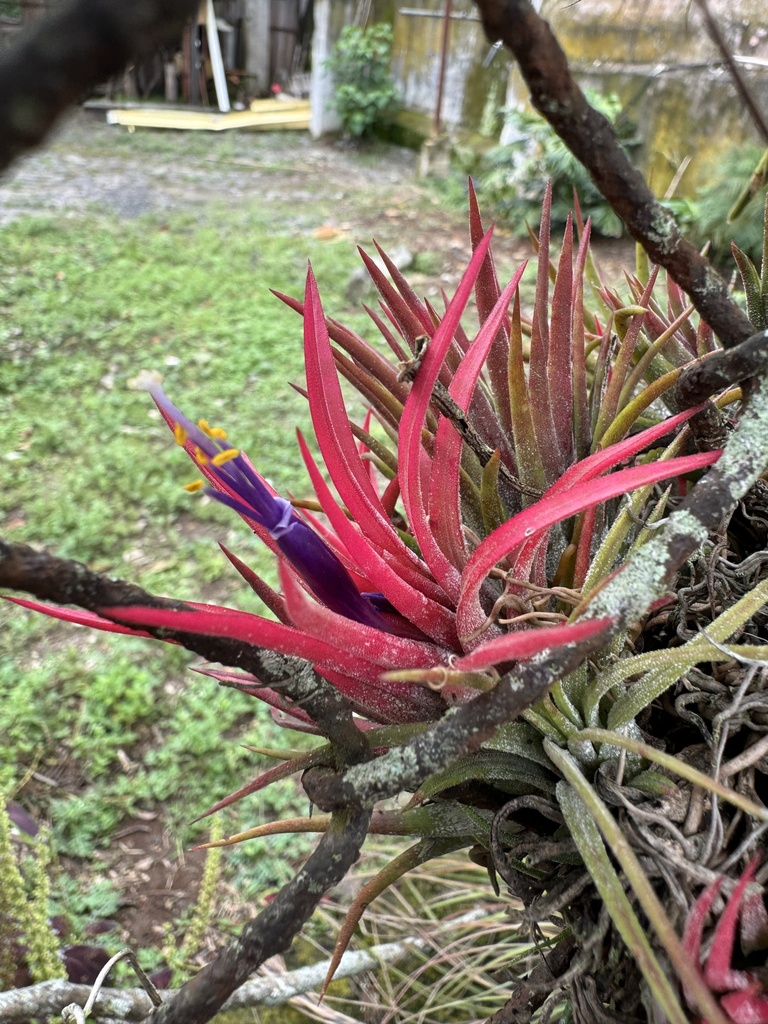
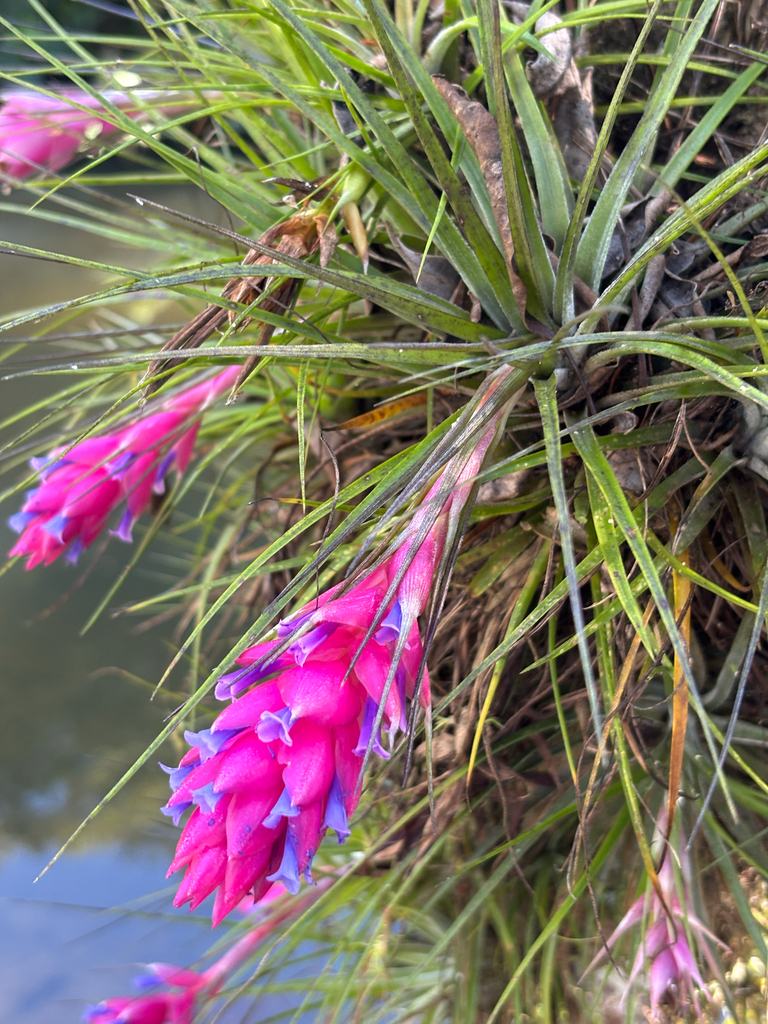
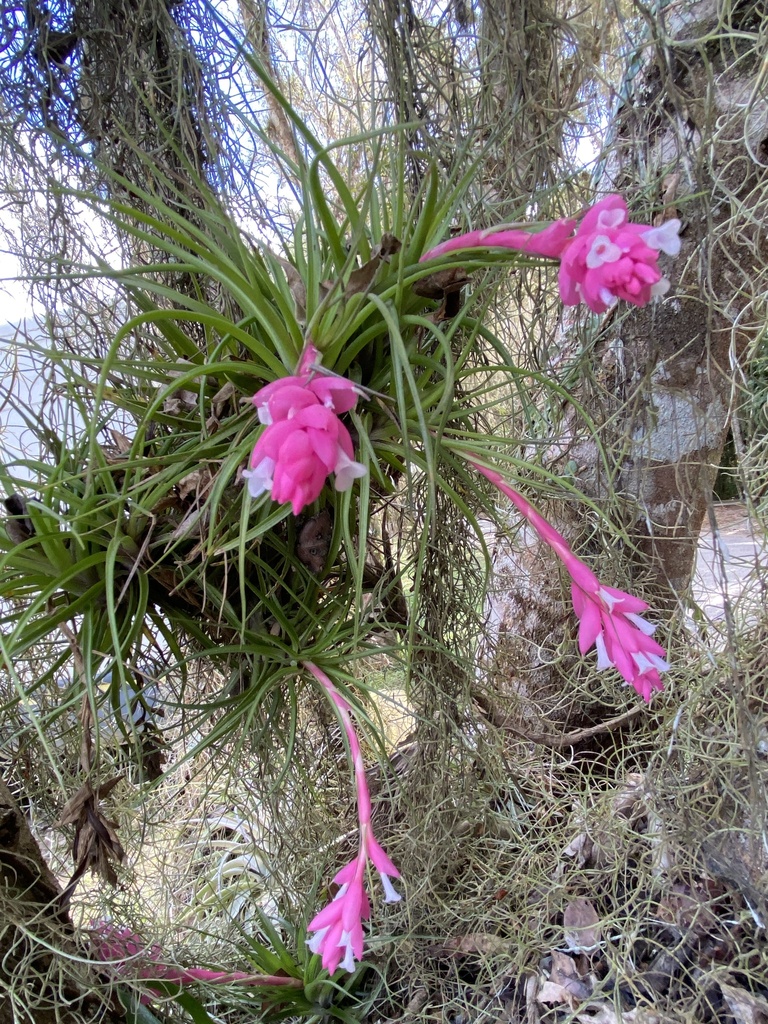
- Blooms with a drooping pink-bracted spike and violet-blue flowers. A true flower display rather than a whole-plant blush.
- One of the fastest-growing tillandsias, pupping generously and forming ball-shaped clumps within a few years.
- Each rosette flowers once, then hands over to its pups (monocarpic).
- Non-toxic to cats and dogs.
Care requirements#
| Plant type | Epiphytic air plant (indoor; outdoors year-round only in USDA 9-11) |
| Growing medium | None: display loose, wired to driftwood, or hung as a clump; never plant in soil |
| Light needs | Bright indirect light; soft-leaf forms take less sun, hard-leaf forms take more |
| Watering method | Soak 20-30 minutes in room-temperature water once a week; mist between soaks in dry rooms |
| Drying after watering | Shake off and dry upside down within 4 hours. Drying upside down keeps water out of the dense rosette and prevents crown rot |
| Water quality | Rain, pond, or rested tap water; never softened water |
| Air circulation | Essential: never seal in a closed terrarium |
| Humidity | 40-60% ideal; increase watering frequency in heated winter rooms |
| Temperature range | 10-32°C (50-90°F); protect from frost |
| Fertilizer | Tillandsia feed at 1/4 strength in the soak monthly, spring-summer. It responds faster than most species |
| Mounting | Wire or plant-safe glue to wood or cork; never copper wire |
| Toxicity | Non-toxic to cats, dogs, and humans |
Growth & propagation#
| Mature size | 10-20cm rosette; clumps to 30cm+ balls |
| Growth rate | Fast for a tillandsia. Pups can bloom in 1-2 years |
| Bloom cycle | Pink bract spike with blue flowers, most often spring; bracts stay showy for weeks |
| Propagation methods | Pups after flowering. Often 2-4 per rosette; separate or leave to clump |
| Propagation difficulty | Easy: among the best clump-formers |
| Pruning needs | Snip spent spikes; groom dead lower leaves from clumps |
Common problems & troubleshooting#
| Symptom | Likely cause | Fix |
|---|---|---|
| Centre leaves pull out easily, base darkens | Crown rot from water sitting in the dense rosette | Usually fatal; prevent by drying upside down after every soak with moving air |
| Leaves curl inward and feel light | Under-watering | Overnight soak, then a reliable weekly schedule |
| Brown crisp tips across the plant | Dry air or salty/softened water | Switch water source; mist midweek in winter |
| Bloomed rosette slowly browning | Normal monocarpic decline after flowering | Leave in place while pups grow; the clump replaces the mother |
| No bloom after 2+ years | Insufficient light | Move closer to a bright window; light drives the pink spike |
Never forget an air plant soak again
Sodate reminds you when your last soak was and nudges you before your stricta starts curling from thirst.
Seasonal care#
Varieties & cultivars#
| Variety | Distinguishing trait | Note |
|---|---|---|
| T. stricta 'Soft Leaf' | Pliable grey-green leaves, fuller look | Most common trade form |
| T. stricta 'Hard Leaf' | Stiff, sun-tolerant leaves | Better for bright hot spots |
| T. stricta 'Midnight' | Near-black foliage in strong light | Collector favourite |
| T. stricta 'Houston' (hybrid with T. recurvifolia) | Big soft pink bloom heads | Technically a hybrid, sold under stricta |
Buying checklist#
- Rosette is tight and springy with no loose centre leaves
- Base is pale and firm, never brown or damp
- Clumps cost more but establish faster than singles
- Avoid plants sealed in closed glass globes
Pricing by region#
| Region | Price range | Typical unit | Basis |
|---|---|---|---|
| US | $5 – $12 | single plant | Air plant nursery + online retail |
| UK | $5 – $13 | single plant | Garden centre + online |
| India | $2 – $7 | single plant | Online exotic plant sellers |
| Australia | $5 – $13 | single plant | Tillandsia specialists |
| Canada | $5 – $13 | single plant | Garden centre + online |
USD figures are approximate conversions for comparison; switch the dropdown to see each region's actual local-currency listing price.
Often confused with#
Name confusion warning#
Shops frequently sell Tillandsia aeranthos and stricta interchangeably as 'pink air plant'. Care is identical, but collectors should buy from sellers who label species properly.
Where it's actually grown#
Mass-produced by air plant farms in Guatemala and Florida and by European growers; its speed from pup to bloom makes it one of the cheapest species to produce.
Import & biosecurity restrictions#
| Region | Note |
|---|---|
| Australia | Live plant imports restricted under biosecurity law; buy from domestic tillandsia nurseries. |
| US | No restriction on domestic sale; imported stock enters with standard phytosanitary certificates. |
| UK | Post-Brexit imports need phytosanitary paperwork; widely available domestically. |
| India | No specific restriction; sold by online exotic plant nurseries. |
| Canada | CFIA permits required for commercial imports; readily available at retail. |
Similar plants
Ranked in these guides
Did you know?
Frequently asked questions
Is Tillandsia stricta safe for pets?
Yes. Like all tillandsias it is non-toxic to cats and dogs.
How do I water Tillandsia stricta?
Soak 20-30 minutes once a week, then shake it off and dry it upside down within 4 hours so water can't sit in the rosette.
What does a stricta bloom look like?
A drooping spike of soft pink bracts with deep blue-violet flowers. The bracts stay colourful for weeks even after the flowers fade.
Does stricta die after blooming?
The flowering rosette does, slowly, but it usually produces 2-4 pups that quickly grow into a clump.
How fast does Tillandsia stricta grow?
Fast by air plant standards. Pups can reach blooming size in one to two years, and a single plant becomes a ball-shaped clump within a few.