 Sodate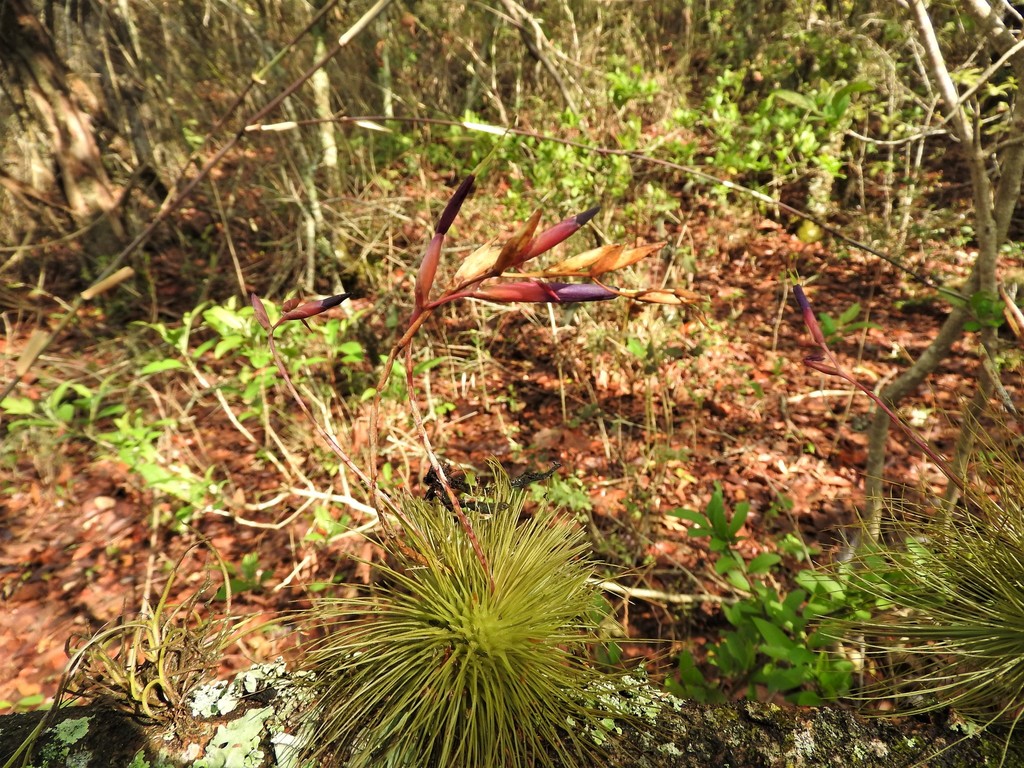
On this page
Fuchsii's hair-fine leaves have almost no water storage, so it dehydrates faster than any chunky species: bright indirect light, a short 15-20 minute soak weekly (or frequent misting), and a quick upside-down dry. The fine crown rots if water lodges in the bulb. Blushes toward bloom with a dramatic 20cm red spike. Pet-safe. Typically $6-$14.
Key facts
- Native to Mexico and Guatemala, growing on oaks and rocks at mid altitudes.
- Long sold under the name Tillandsia argentea. Most shop 'argentea' is this species.
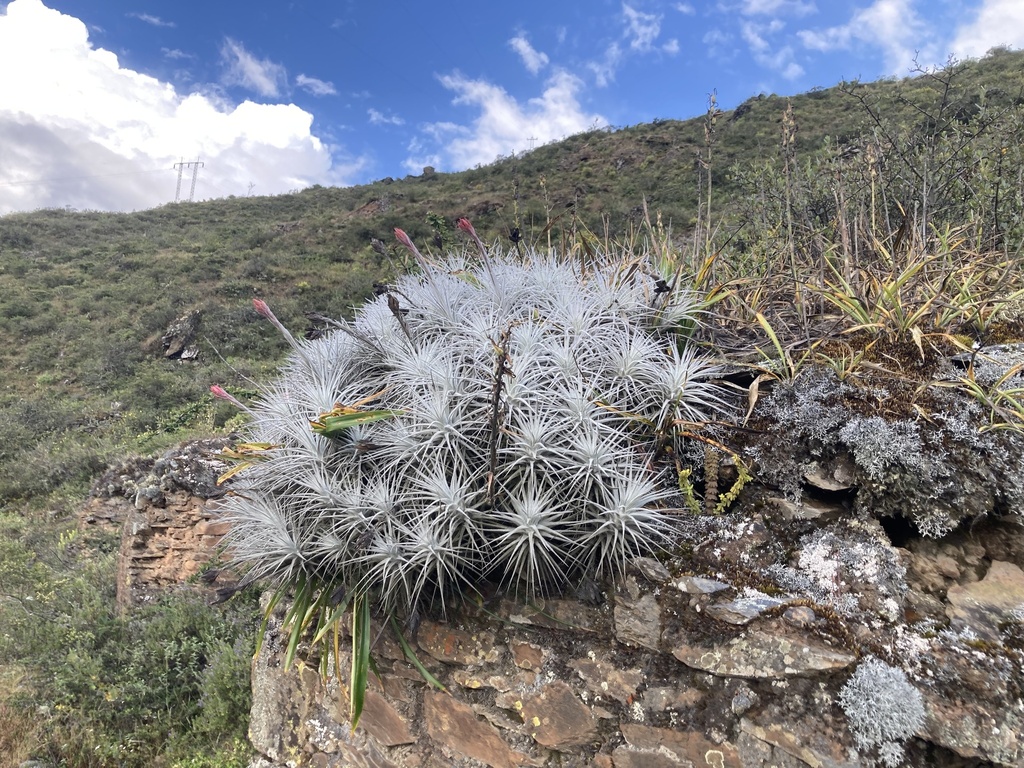
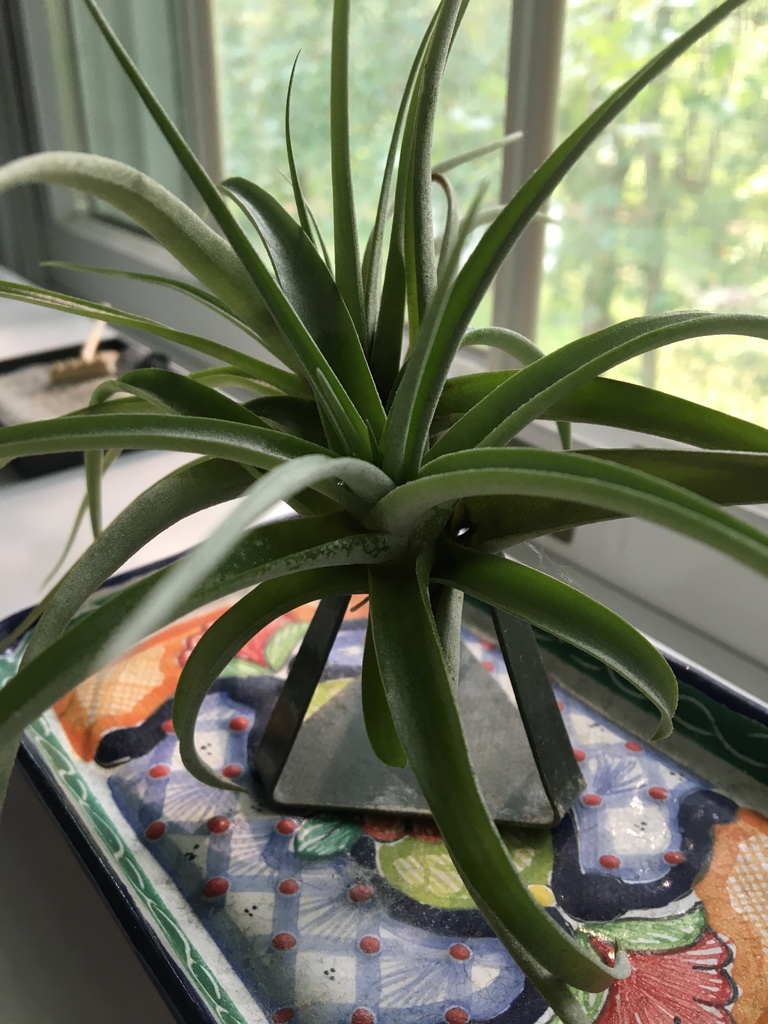
- Hundreds of thread-fine silvery leaves radiate from a small bulbous base, forming a near-perfect sphere.
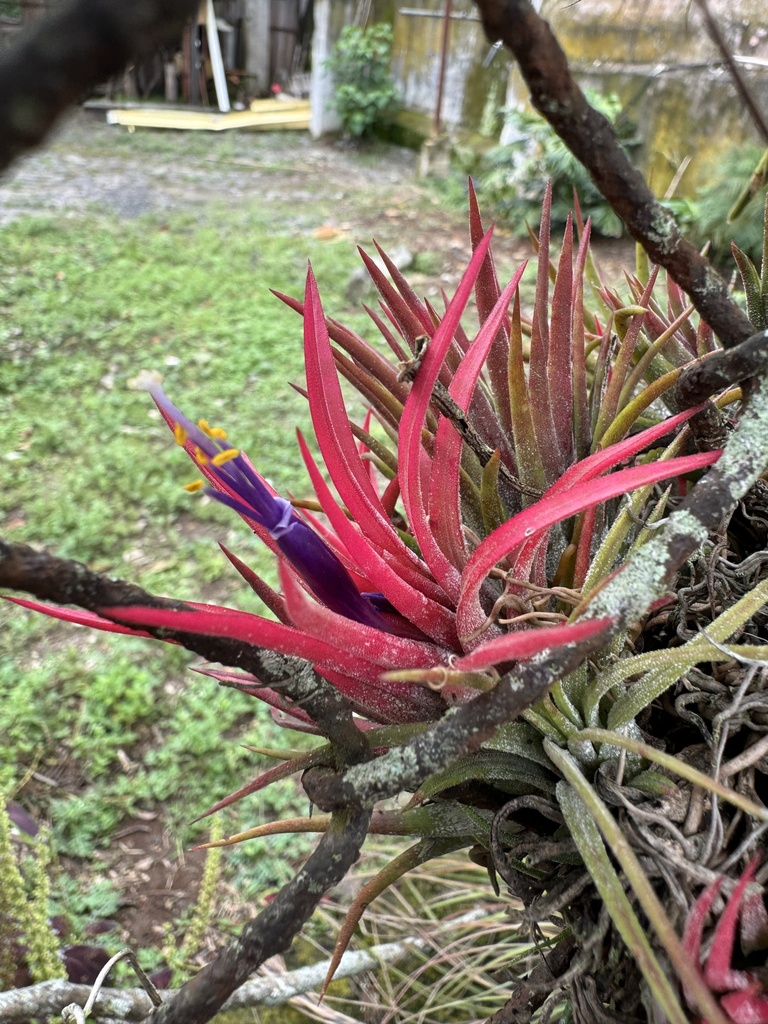
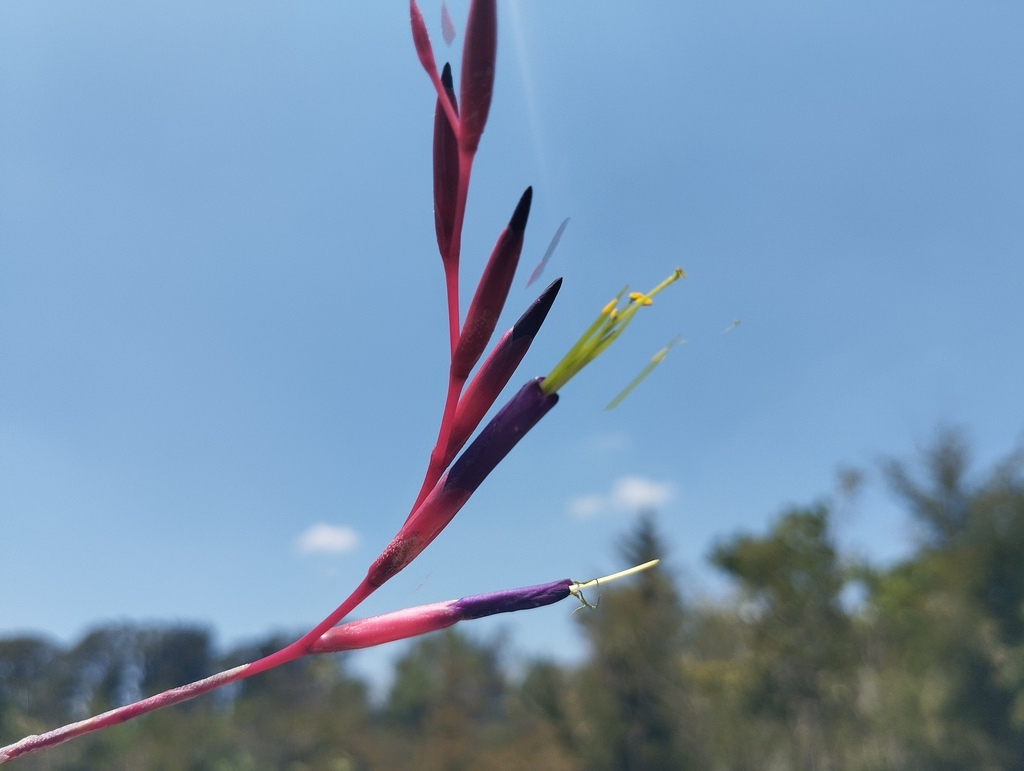
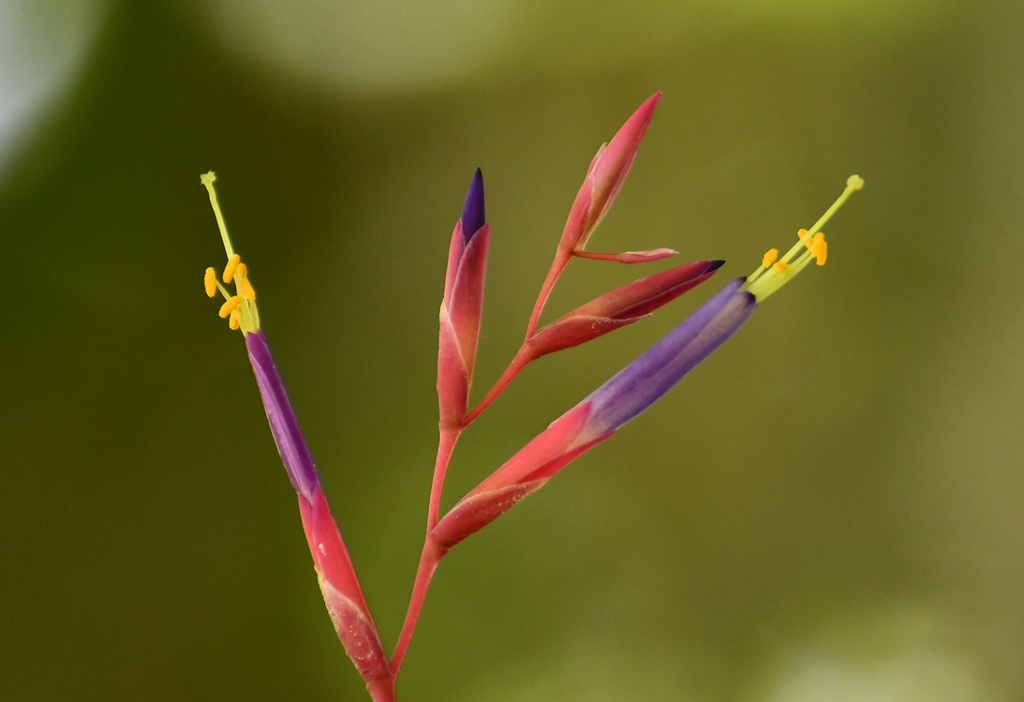
- The bloom spike is comically oversized: a 15-25cm red stem from a 5cm plant, ending in violet tubular flowers; leaves blush at bloom.
- Non-toxic to cats and dogs.
Care requirements#
| Plant type | Epiphytic/saxicolous miniature air plant (indoor; outdoors year-round only in USDA 9-11) |
| Growing medium | None: display loose or wired to cork, rock, or driftwood; never soil |
| Light needs | Bright indirect light with some gentle morning sun |
| Watering method | Short 15-20 minute soak weekly, or misting every 2-3 days; fine leaves rehydrate fast but also dry out fast |
| Drying after watering | Shake gently and dry upside down within 2-3 hours. Water lodged in the tiny bulb and dense crown causes rot, and upside-down drying is what prevents it |
| Water quality | Rain or rested tap water; never softened water |
| Air circulation | Essential: the dense sphere holds moisture in still air |
| Humidity | 40-60%; mist more often in heated rooms |
| Temperature range | 10-30°C (50-86°F); protect from frost |
| Fertilizer | Tillandsia feed at 1/4 strength in the soak monthly, spring-summer |
| Mounting | A dab of plant-safe glue under the bulb or a loose wire cradle; never copper wire |
| Toxicity | Non-toxic to cats, dogs, and humans |
Growth & propagation#
| Mature size | 5-9cm sphere; bloom spike to 25cm |
| Growth rate | Slow; pups take 1-2 years to size up |
| Bloom cycle | Leaves blush rosy, then a long thin red spike with violet flowers, usually spring-summer |
| Propagation methods | Pups at the base after flowering |
| Propagation difficulty | Moderate: pups are tiny and delicate at separation size |
| Pruning needs | Snip the spent spike at its base; groom shed leaves from the sphere |
Common problems & troubleshooting#
| Symptom | Likely cause | Fix |
|---|---|---|
| Whole sections of fine leaves shed at a touch | Rot in the bulb from trapped water | Rarely recoverable; prevent with short soaks, gentle shaking, and upside-down drying |
| Leaf tips crisp all over the sphere | Dehydration. Fine leaves have no reserves | A 2-hour soak, then a stricter weekly schedule with midweek misting |
| Sphere looks dull grey-brown instead of bright silver | Trichome damage from softened water or handling | Switch water source and handle by the base only |
| Plant fades after its red spike | Normal monocarpic decline | Wait for pups at the base before discarding anything |
| No blush or bloom after years | Light too low | Brighter position with some morning sun |
Never forget an air plant soak again
Sodate reminds you when your last soak was. Thread-leaved species like fuchsii give you the least margin for a missed week.
Seasonal care#
Varieties & cultivars#
| Variety | Distinguishing trait | Note |
|---|---|---|
| T. fuchsii f. gracilis | Even finer, longer, more open leaves | The common trade form |
| T. fuchsii f. stephanii | Stouter leaves, denser sphere | Less common collector form |
Buying checklist#
- Sphere is full and symmetrical with minimal shed leaves
- Leaves are silver and springy, not crisped at the tips
- Base bulb is firm with no dark patches
- Avoid closed glass globes. The dense crown rots quickly without airflow
Pricing by region#
| Region | Price range | Typical unit | Basis |
|---|---|---|---|
| US | $6 – $14 | single plant | Air plant nursery + online retail |
| UK | $6 – $15 | single plant | Specialist online sellers |
| India | $3 – $9 | single plant | Online exotic plant sellers |
| Australia | $6 – $15 | single plant | Tillandsia specialists |
| Canada | $6 – $15 | single plant | Specialist online sellers |
USD figures are approximate conversions for comparison; switch the dropdown to see each region's actual local-currency listing price.
Often confused with#
Name confusion warning#
Still widely sold as Tillandsia argentea. That older name belongs properly to a different Cuban species, so 'argentea' on a label almost always means fuchsii.
Where it's actually grown#
Farm-grown in Guatemala and by specialist growers in the US and Europe; its slow pace keeps it slightly pricier than mass-market species.
Import & biosecurity restrictions#
| Region | Note |
|---|---|
| Australia | Live plant imports restricted under biosecurity law; buy from domestic tillandsia nurseries. |
| US | No restriction on domestic sale; imported stock enters with standard phytosanitary certificates. |
| UK | Post-Brexit imports need phytosanitary paperwork; available from specialist sellers. |
| India | No specific restriction; sold by online exotic plant nurseries. |
| Canada | CFIA permits required for commercial imports; available via specialist sellers. |
Similar plants
Ranked in these guides
Did you know?
Frequently asked questions
Is Tillandsia fuchsii the same as Tillandsia argentea?
In shops, yes. The plant long sold as argentea was renamed T. fuchsii; the true argentea is a rarer Cuban species.
How often should I water fuchsii?
A short 15-20 minute soak weekly, or misting every 2-3 days; its thread-fine leaves dry out faster than chunkier air plants.
Is fuchsii pet-safe?
Yes, like all tillandsias it is non-toxic to cats and dogs.
Why are my fuchsii's leaf tips going crispy?
It's dehydrating. The fine leaves have almost no reserves, so tighten the weekly soak schedule and add midweek misting in dry rooms.
What does a fuchsii flower look like?
A thin red spike up to 25cm tall, several times the plant's own height, carrying violet tubular flowers, while the leaves take on a rosy blush.