 Sodate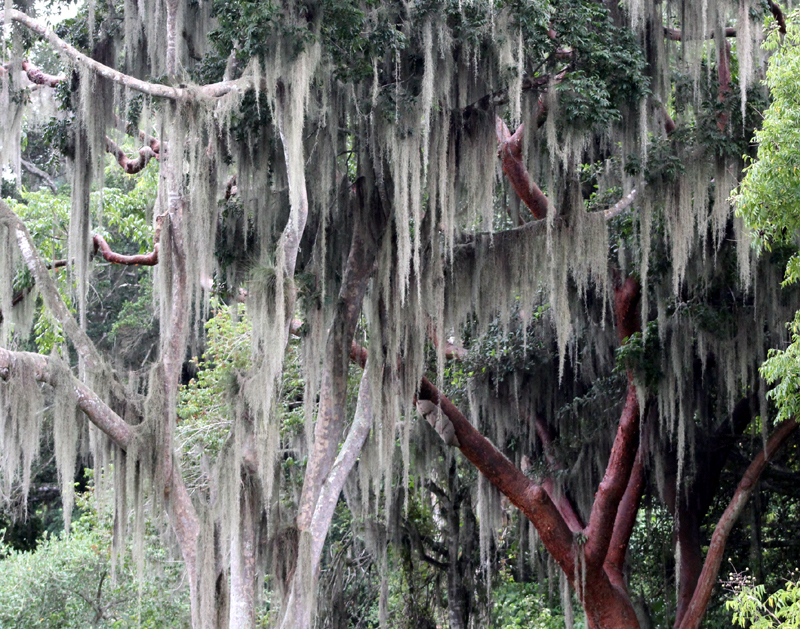

On this page
Spanish moss is the highest-water air plant most people will own: mist thoroughly 3-4 times a week (daily in dry homes), or dunk the whole curtain weekly, and hang it where air moves so it dries between waterings. Bright indirect light, no soil, no pot, just drape it. Pet-safe, fast-growing for a tillandsia, and cheap. Note that craft-store 'Spanish moss' is usually dead, dyed material.
Key facts
- Native from the southeastern US through Central and South America. The widest range of any bromeliad.
- It has no functional roots at all; every strand absorbs water and nutrients through trichome scales along its length.
- Each 'strand' is actually a chain of many tiny individual plants; any broken fragment can grow into a new curtain.
- Despite the swampy image, it needs airflow and drying cycles. Constantly wet moss rots just like other tillandsias.
- Non-toxic to cats and dogs (though wild-collected moss can harbor chiggers. Another reason to buy nursery stock).
Care requirements#
| Plant type | Rootless epiphytic air plant (indoor, or outdoors year-round in USDA 8-11) |
| Growing medium | None: drape over a hook, branch, wire, or trellis; never bag it or pot it |
| Light needs | Bright indirect light or dappled sun; scorches in hot direct afternoon sun indoors |
| Watering method | Mist thoroughly until dripping 3-4x weekly, or dunk/shower the whole mass once a week; daily misting in dry heated rooms |
| Drying after watering | Hang with space around it so strands dry within a few hours; a wet, compacted wad will rot inside |
| Water quality | Rain or rested tap water; avoid softened water |
| Air circulation | Critical: it evolved hanging in moving air; stagnant corners kill it |
| Humidity | Loves 50%+; ideal over a kitchen sink or in a bright bathroom |
| Temperature range | 10-35°C (50-95°F); survives brief light frosts outdoors when established |
| Fertilizer | Optional: tillandsia feed at 1/4 strength in a monthly dunk during spring-summer |
| Display tip | Divide into loose, thin curtains rather than one dense clump so light and air reach every strand |
| Toxicity | Non-toxic to cats, dogs, and humans |
Growth & propagation#
| Mature size | Strands lengthen indefinitely. Wild festoons reach 3-6m; indoor curtains typically 30-100cm |
| Growth rate | Fast for a tillandsia. Noticeably longer within a season when watered well |
| Bloom cycle | Tiny, fragrant chartreuse-green flowers hidden along the strands in spring-summer |
| Propagation methods | Division: pull off a handful and hang it somewhere new; that's the whole technique |
| Propagation difficulty | Trivially easy; every fragment is a viable plant |
| Pruning needs | Trim or pull out dead grey-brown sections to keep the curtain airy |
Common problems & troubleshooting#
| Symptom | Likely cause | Fix |
|---|---|---|
| Strands turn crispy, pale, and snap when bent | Under-watering. The most common indoor failure | Dunk for an hour, then move to a 3-4x weekly misting schedule; crisped sections won't revive, so trim them out |
| Black, slimy patches inside a dense clump | Rot. The middle of a thick wad never dries | Pull the mass apart into thin curtains, discard rotted sections, improve airflow |
| Color fades to dull grey-green with weak, thin new growth | Too little light | Move within 1m of a bright window; growth thickens back up in weeks |
| Curtain thins from the top where it touches the hanger | The contact point stays wet and rots, or the wire is copper (toxic to tillandsias) | Rehang over wood, plastic-coated wire, or rope, and vary the drape point occasionally |
| Itchy bites after handling outdoor-collected moss | Chiggers and other arthropods living in wild moss | Buy nursery-grown live moss; if using wild moss, soak it in warm water before bringing it indoors |
The air plant that actually wants frequent water
Sodate keeps a misting rhythm going so your moss curtain never crisps up strand by strand.
Seasonal care#
Varieties & cultivars#
| Variety | Distinguishing trait | Note |
|---|---|---|
| 'Maurice's Robusta' / thick forms | Noticeably thicker, silverier strands | Popular with collectors; slower growing |
| Fine/filiform forms | Hair-thin strands with a mistier look | Dry out faster. Need the most frequent misting |
| 'Munro's Filiformis' | Very fine, dense curtain form | Sought-after named clone |
Buying checklist#
- Confirm it is LIVE moss. Craft-store Spanish moss is dead, dried, often dyed material
- Strands show silvery-green color with plump scales, not uniform grey-brown
- No sour smell or slimy dark sections in the center of the bundle
- Nursery-grown stock, not wild-collected (chigger risk and legality on public lands)
Pricing by region#
| Region | Price range | Typical unit | Basis |
|---|---|---|---|
| US | $5 – $15 | live bundle/bag | Air plant nursery + online retail |
| UK | $6 – $19 | live bundle | Specialist online sellers |
| India | $2 – $7 | live bundle | Online exotic plant sellers |
| Australia | $6 – $20 | live bundle | Domestic tillandsia nurseries |
| Canada | $6 – $18 | live bundle | Garden centre + online |
USD figures are approximate conversions for comparison; switch the dropdown to see each region's actual local-currency listing price.
Often confused with#
Name confusion warning#
Neither Spanish nor a moss. It's a flowering bromeliad from the Americas. French colonists called it 'Spanish beard' as a jab at Spanish rivals, and the name stuck. It also has no relation to true mosses, so moss-care advice (constant wetness, shade) will kill it.
Where it's actually grown#
Live Spanish moss is farmed by air plant nurseries in Florida, California, and Guatemala, and grows so readily that much retail stock is simply divisions of greenhouse curtains; the dried craft-trade material is harvested and processed separately, mostly in the US South.
Import & biosecurity restrictions#
| Region | Note |
|---|---|
| US | No restriction; native across the Southeast. Collecting from public lands may be regulated locally. |
| UK | No specific restriction; imported live stock needs standard phytosanitary certificates. |
| Australia | Live plant imports restricted under biosecurity law; domestic nursery stock is available. |
| India | No specific restriction; sold by online exotic plant nurseries. |
| Canada | CFIA permits required for commercial imports; sold as a houseplant. |
Similar plants
Ranked in these guides
Did you know?
Frequently asked questions
Is Spanish moss safe for pets?
Yes. Live Tillandsia usneoides is non-toxic to cats and dogs. Wild-collected moss can carry chiggers, so buy nursery-grown stock.
How often should I water Spanish moss?
More than any other common air plant: mist until dripping 3-4 times a week (daily in dry heated rooms), or dunk the whole curtain once a week, and let it dry in moving air between waterings.
Is Spanish moss actually a moss?
No. It's a flowering bromeliad, an air plant related to pineapples. The name comes from its mossy look hanging in trees.
Does Spanish moss kill the trees it grows on?
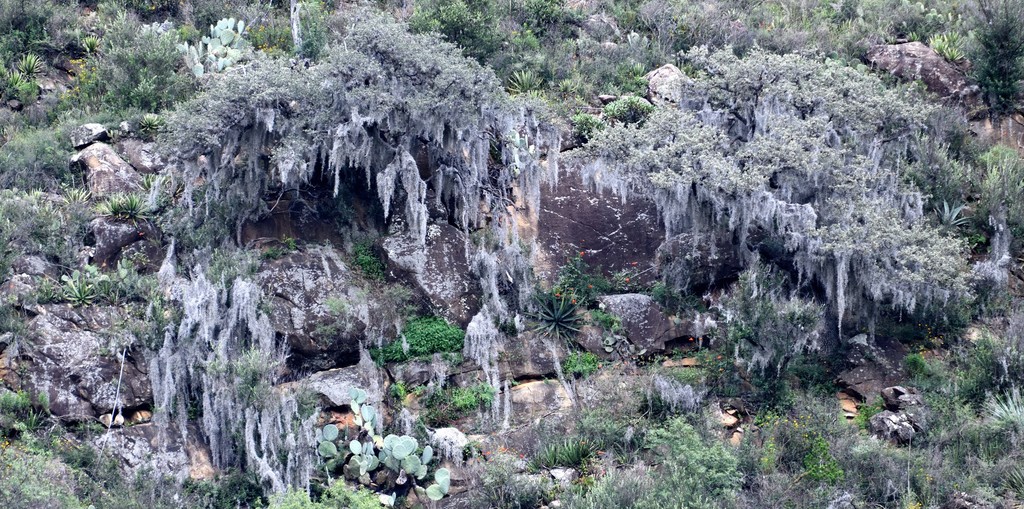
No. It's an epiphyte, not a parasite. It takes nothing from the tree; heavy festoons only matter by shading leaves or adding wind weight.
Can I grow Spanish moss from a small piece?
Yes. Every strand is a chain of individual plants, and any healthy fragment draped somewhere bright and misted regularly will grow into a new curtain.