 Sodate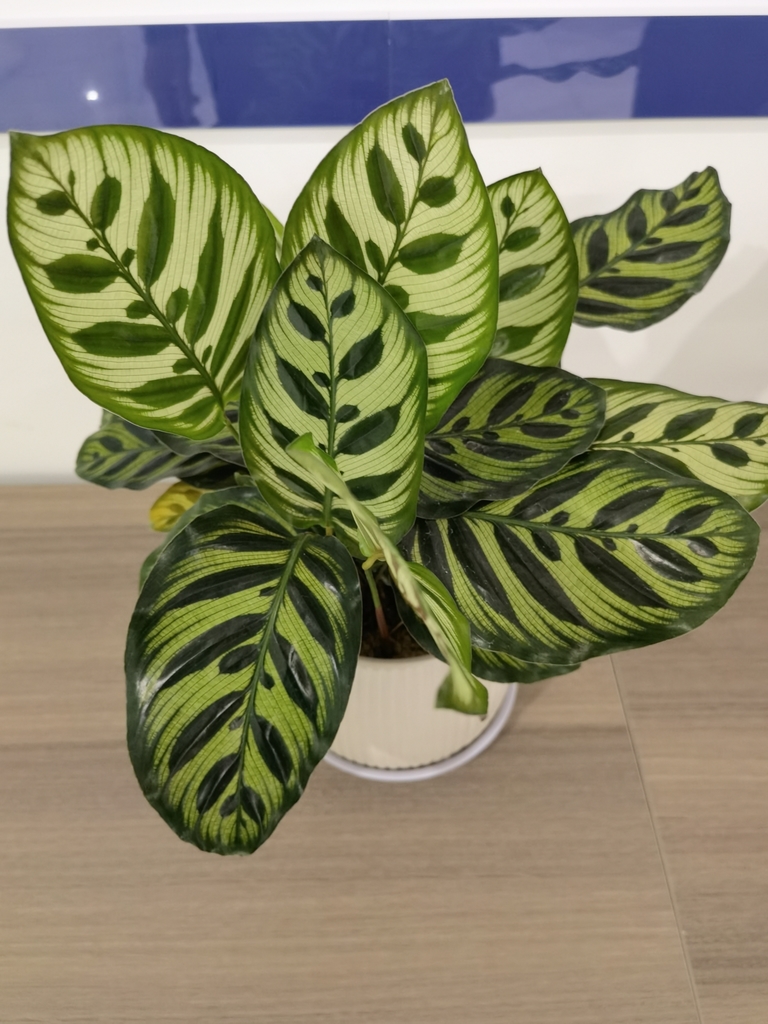
On this page
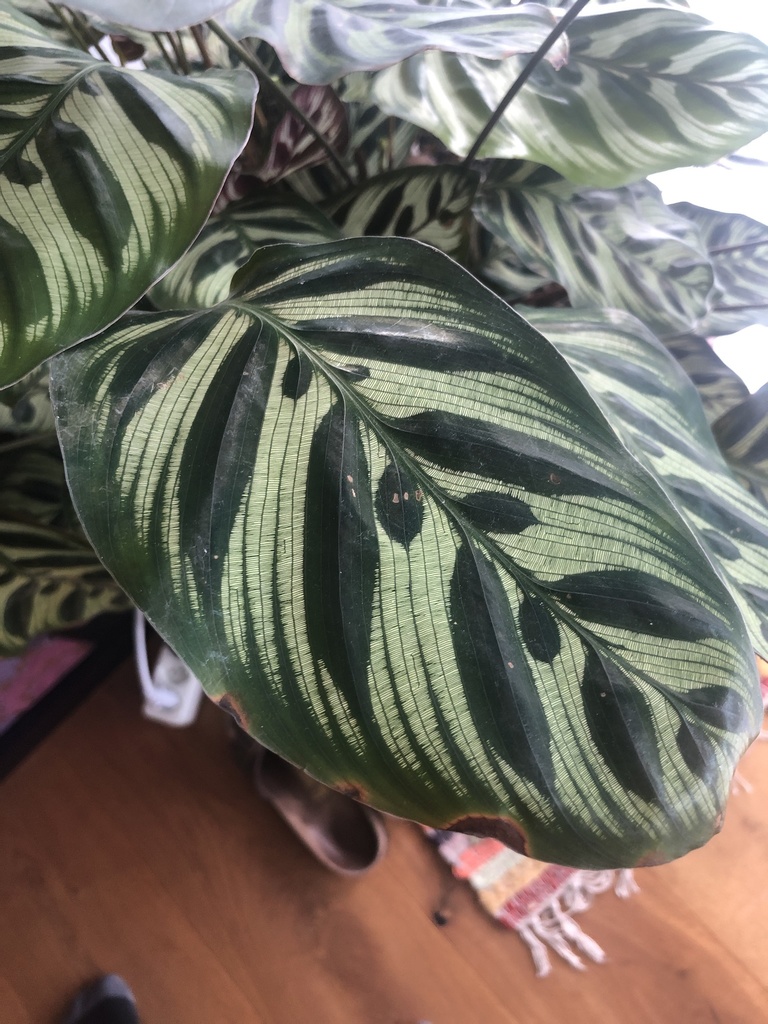
The peacock plant is one of the fussier calatheas, and its very thin leaves make every mistake visible. Hard, chlorinated or fluoridated tap water produces crisp brown edges within weeks, so distilled water or rainwater is effectively required, and it wants humidity above 60%. It is non-toxic to cats and dogs and the leaf pattern is among the best in the genus, but this is a demanding plant that will not tolerate a dry, centrally heated room. Typical price $12-$30.
Key facts
- The leaves are unusually thin and translucent for a calathea, which means water-quality and humidity damage shows up faster and more visibly than on thicker-leaved relatives.
- Tap water minerals, chlorine and fluoride accumulate at the leaf margins and cause permanent brown crisping; distilled water or rainwater prevents it.
- It folds its leaves upright at night and lowers them by day, a pressure-driven hinge movement shared across the Marantaceae.
- Completely non-toxic to cats and dogs, unlike most dramatic-foliage houseplants.
Care requirements#
| Plant type | Indoor only; a tropical forest-floor perennial |
| Growing medium | Airy peat-free mix of coir, fine bark and perlite that holds moisture without compacting |
| Light needs | Medium to bright indirect light; direct sun fades the pattern and burns the thin leaves quickly |
| Water frequency | Every 5-7 days, keeping the mix lightly and evenly moist; distilled water, filtered water or rainwater only |
| Humidity | 60%+ needed; a humidifier or a genuinely humid bathroom is the realistic option |
| Temperature range | 18-27°C (65-80°F); avoid draughts and anything below 15°C (59°F) |
| Fertilizer | Half-strength balanced feed monthly through spring and summer; flush the pot quarterly to clear salts |
| Soil pH | 6.0-6.5 |
| Drainage needs | High: evenly moist but never standing wet |
| Pot recommendation | Plastic or glazed pot with drainage holes; terracotta dries the rootball too quickly |
| Hardiness zone (outdoor) | USDA 11-12; grown indoors everywhere else |
| Toxicity | Non-toxic to cats, dogs and humans |
Growth & propagation#
| Mature size | 40-60cm tall and wide indoors |
| Growth rate | Moderate in good conditions; stalls badly in dry air |
| Propagation methods | Rhizome division in spring; cuttings do not root |
| Propagation difficulty | Moderate: divisions are slow to recover and often drop leaves first |
| Repotting schedule | Every 2 years in spring, one pot size up |
| Pruning needs | Remove browned leaves at the base; trimming edges just creates a new brown line |
Common problems & troubleshooting#
| Symptom | Likely cause | Fix |
|---|---|---|
| Thin brown crisping around the whole leaf margin | Tap water minerals and fluoride combined with dry air | Switch to distilled water or rainwater, flush the pot to leach salts, and add a humidifier |
| Leaves permanently curled and rolled | Underwatering or very low humidity | Water thoroughly, then raise ambient humidity; night curling that reverses by morning is normal behaviour |
| Pattern fading to plain pale green | Too much direct light | Move to a shadier position with bright indirect light only |
| Speckled leaves with fine webbing underneath | Spider mites | Rinse foliage, treat with insecticidal soap weekly for three weeks and correct the dry air that let them establish |
| Sudden collapse with soft stem bases | Root rot from a waterlogged, compacted mix | Repot into a bark-and-perlite mix, trim rotted roots and water less at a time but more evenly |
The plant that punishes fixed schedules
Sodate reads your actual light, season and room conditions and adjusts, which is what a thin-leaved calathea needs from you.
Seasonal care#
Varieties & cultivars#
| Variety | Distinguishing trait | Note |
|---|---|---|
| Goeppertia makoyana (species form) | Feathered dark ovals on translucent pale leaves | Essentially the only form in retail |
| Goeppertia veitchiana (Medallion) | Thicker round leaves with a bold pale centre | Sold alongside; slightly sturdier leaves |
| Goeppertia roseopicta 'Dottie' | Near-black leaves with a pink midrib line | Same demanding care profile |
Buying checklist#
- No brown crisping already present on the leaf margins
- At least one rolled new leaf emerging from the centre
- No webbing between stalks or stippling on leaf undersides
- You have distilled or filtered water and a humidity plan lined up
Pricing by region#
| Region | Price range | Typical unit | Basis |
|---|---|---|---|
| US | $12 – $30 | 6in pot | Big-box + specialist nursery retail |
| UK | $11 – $28 | 14-17cm pot | Garden centre retail |
| India | $4 – $12 | 6in pot | Urban nursery retail |
| Australia | $14 – $32 | 150mm pot | Nursery + garden centre |
| Canada | $13 – $30 | 6in pot | Garden centre retail |
USD figures are approximate conversions for comparison; switch the dropdown to see each region's actual local-currency listing price.
Often confused with#
Name confusion warning#
"Peacock plant" is used loosely across several patterned Marantaceae, and the correct botanical name is now Goeppertia makoyana rather than Calathea makoyana, following the 2012 split of the genus. Nearly every retail label still says Calathea.
Where it's actually grown#
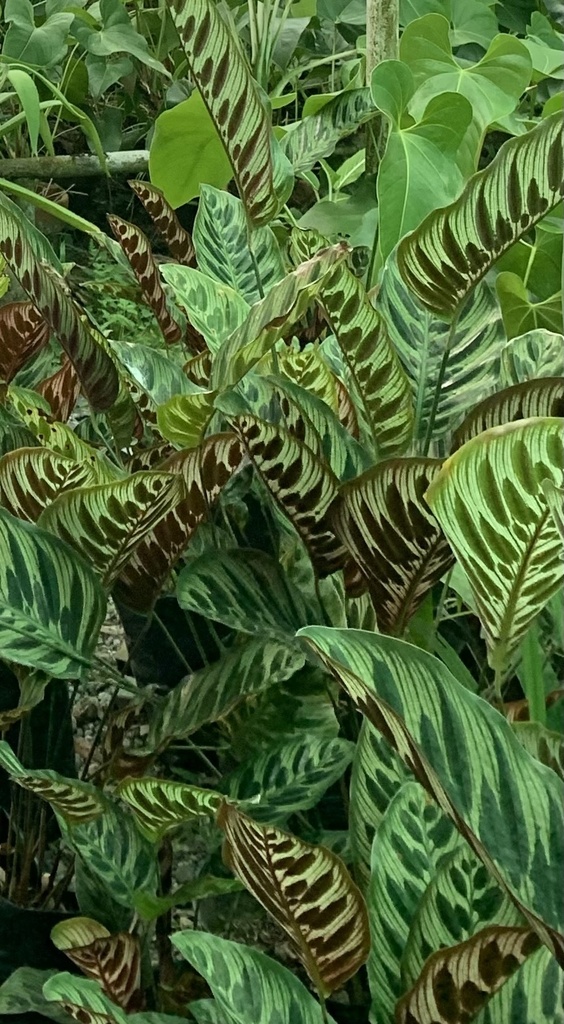
Retail stock is tissue-cultured and grown on in the Netherlands, Costa Rica, Florida, Thailand and China. The wild species is native to eastern Brazil, where it grows on the shaded forest floor; wild collection plays no part in the houseplant trade.
Import & biosecurity restrictions#
| Region | Note |
|---|---|
| Australia | Live plant imports restricted under biosecurity law; domestic tissue-culture stock is widely available. |
| US | Domestic sale unrestricted; most retail plants are Florida-finished. |
| UK | Phytosanitary certificates required for commercial imports; retail sale unrestricted. |
| India | No restriction; struggles in dry-season indoor air without a humidifier. |
| Canada | CFIA permits required for commercial imports; sold widely as a houseplant. |
Similar plants
Ranked in these guides
Did you know?
Frequently asked questions
Is Calathea makoyana easy to care for?
No. It is demanding. Thin leaves brown quickly from tap water minerals and low humidity, so it needs distilled water and 60%+ humidity to look good.
Why are my peacock plant leaves browning at the edges?
Minerals, chlorine and fluoride in tap water, worsened by dry air. Switch to distilled water or rainwater and raise humidity.
Is the peacock plant toxic to cats or dogs?
No, it is non-toxic to both.
Why do the leaves move at night?
A pressure-driven hinge called a pulvinus at the base of each leaf stalk raises the leaves at night and lowers them by day. It is normal and a sign of a healthy plant.
How much does a Calathea makoyana cost?
Usually $12-$30 in the US for a 6-inch pot.