 Sodate
On this page
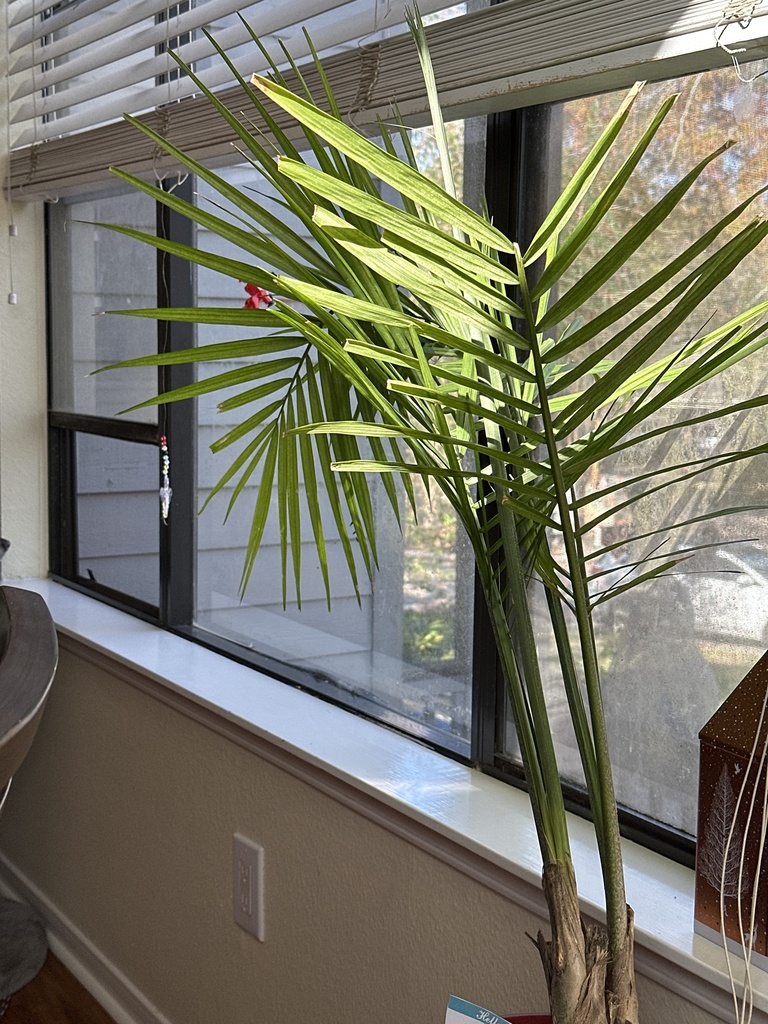
The kentia palm is the gold standard indoor palm: it tolerates lower light than any other commonly sold palm, shrugs off dry indoor air, and is non-toxic to pets. It is expensive ($60-$250+) because it grows very slowly and nurseries raise it for years before sale. Water when the top few centimeters of soil dry out and avoid repotting often, as it dislikes root disturbance.
Key facts
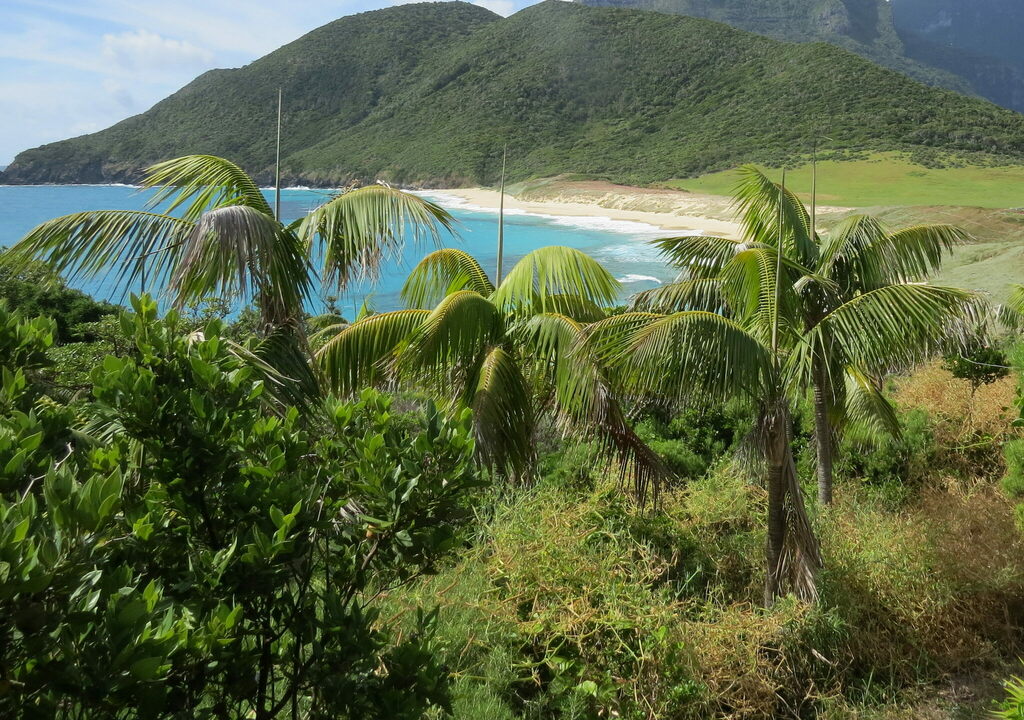
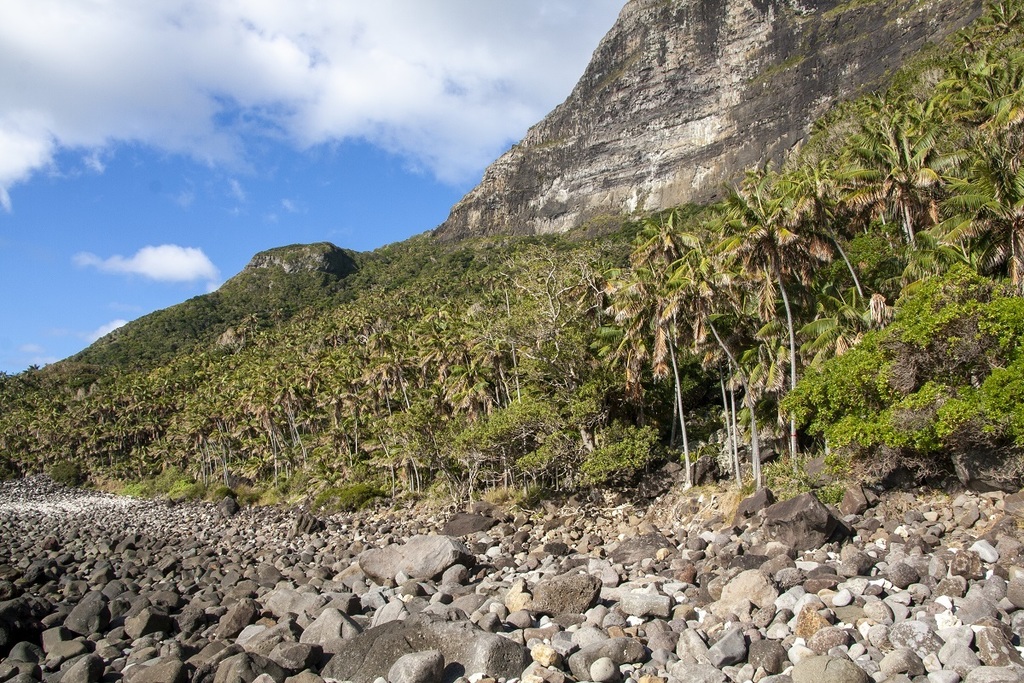
- Endemic to Lord Howe Island, a tiny Australian island in the Tasman Sea; seed harvesting there is a regulated local industry.
- The most low-light-tolerant palm in the houseplant trade. It keeps its deep green color where areca and majesty palms decline.
- Expensive because it is genuinely slow: nursery plants are typically 3-5+ years old at sale, often with several seedlings per pot.
- Non-toxic to cats and dogs, like all true palms.
Care requirements#
| Plant type | Indoor (outdoors year-round only in USDA 9b-11) |
| Growing medium | Well-draining, peat- or coir-based potting mix with added perlite or bark |
| Light needs | Bright indirect light is ideal, but it tolerates genuinely low light better than any other palm; avoid hot direct sun |
| Water frequency | When the top 3-5cm of soil is dry. Roughly weekly in summer, every 2-3 weeks in winter |
| Humidity | Tolerates normal household humidity; browning tips lessen above 40-50% |
| Temperature range | 16-26°C (60-80°F); tolerates brief dips to around 10°C (50°F) |
| Fertilizer | Balanced liquid feed monthly in spring-summer at half strength; none in winter |
| Soil pH | 6.0-7.0 |
| Drainage needs | High: never let it sit in a saucer of water |
| Pot recommendation | Deep, heavy pot with drainage; repot rarely as roots resent disturbance |
| Hardiness zone (outdoor) | USDA 9b-11 |
| Toxicity | Non-toxic to cats, dogs, and humans |
Growth & propagation#
| Mature size | 2-3m indoors over many years; up to 10m+ in the ground outdoors |
| Growth rate | Slow: typically one to a few new fronds per year indoors |
| Propagation methods | Seed only, and seeds take months to years to germinate; home propagation is impractical |
| Propagation difficulty | Very hard. Buy nursery plants rather than attempting seed |
| Repotting schedule | Every 3-4 years at most, only when clearly root-bound; handle the root ball gently |
| Pruning needs | Remove fully brown fronds at the base; never cut the single growing tip |
Common problems & troubleshooting#
| Symptom | Likely cause | Fix |
|---|---|---|
| Brown frond tips | Dry air, fluoride/salts in tap water, or underwatering | Trim tips just inside the brown edge, water more consistently, and use filtered or rested water |
| Yellowing lower fronds | Normal aging if occasional; overwatering if several yellow at once | Check soil moisture; let it dry further between waterings and confirm the pot drains |
| Fine webbing and stippled, dusty-looking fronds | Spider mites, the kentia's most common pest in dry rooms | Shower the foliage, then treat repeatedly with insecticidal soap or horticultural oil |
| Fronds bleached or scorched with pale patches | Direct sun on foliage acclimated to shade | Move out of direct sun; damaged fronds won't recover but new growth will be fine |
| Plant declines after repotting | Root disturbance. Kentias resent being repotted | Keep conditions stable, water carefully, and be patient; avoid repotting again for years |
Water it right, keep it for decades
Sodate reminds you to water only when the kentia's soil has actually started to dry, so you never trade a decade-old palm for a week of soggy roots.
Seasonal care#
Varieties & cultivars#
| Variety | Distinguishing trait | Note |
|---|---|---|
| Howea belmoreana (curly/sentry palm) | More upright, arched fronds and a slimmer habit | The kentia's only sibling species, also from Lord Howe Island; occasionally sold interchangeably |
Buying checklist#
- Multiple stems per pot is normal. Nurseries plant several seedlings together for fullness
- Fronds are deep green with no fine webbing (spider mites) on the undersides
- Base of stems is firm, with no sour smell from the soil
- Bigger is genuinely older: a 1.5m kentia represents years of growing, so expect the price to match
Pricing by region#
| Region | Price range | Typical unit | Basis |
|---|---|---|---|
| US | $60 – $250 | 10-14in pot, 3-6ft | Specialist nursery + online retail |
| UK | $50 – $230 | 21-27cm pot, 1-1.8m | Garden centre + houseplant retail |
| India | $8 – $45 | 10-14in pot | Urban nursery + online |
| Australia | $45 – $200 | 200-300mm pot | Nursery retail (locally native) |
| Canada | $60 – $260 | 10-14in pot | Garden centre + online retail |
USD figures are approximate conversions for comparison; switch the dropdown to see each region's actual local-currency listing price.
Often confused with#
Where it's actually grown#
Nearly all kentia palm seed is still harvested on Lord Howe Island under a managed local industry, then germinated and grown on for years in nurseries in the Netherlands, California, and Australia before sale. A key reason retail plants cost what they do.
Import & biosecurity restrictions#
| Region | Note |
|---|---|
| Australia | Live plant imports restricted under biosecurity law; irrelevant in practice since the species is Australian and widely grown domestically. |
| US | Domestic sale unrestricted; most large stock grown in California and Florida. |
| UK | No specific restriction; imported via Dutch nurseries with plant passports. |
| India | No restriction; grown in Indian nurseries and much cheaper locally. |
| Canada | CFIA permits required for commercial imports; sold through garden centres. |
Similar plants
Ranked in these guides
Did you know?
Frequently asked questions
Is the kentia palm safe for cats and dogs?
Yes. Like all true palms it is non-toxic to cats, dogs, and humans.
Why are kentia palms so expensive?
They grow very slowly and are raised from regulated Lord Howe Island seed for 3-5+ years before sale, so you are paying for nursery time.
Can a kentia palm live in low light?
Yes. It is the most low-light-tolerant palm commonly sold, though growth will be slower and brighter indirect light keeps it fuller.
How often should I water a kentia palm?
When the top 3-5cm of soil feels dry. Roughly weekly in summer and every 2-3 weeks in winter.
Why are my kentia palm's tips turning brown?
Usually dry air, salty tap water, or inconsistent watering; trim the tips and water more evenly with filtered water.