 Sodate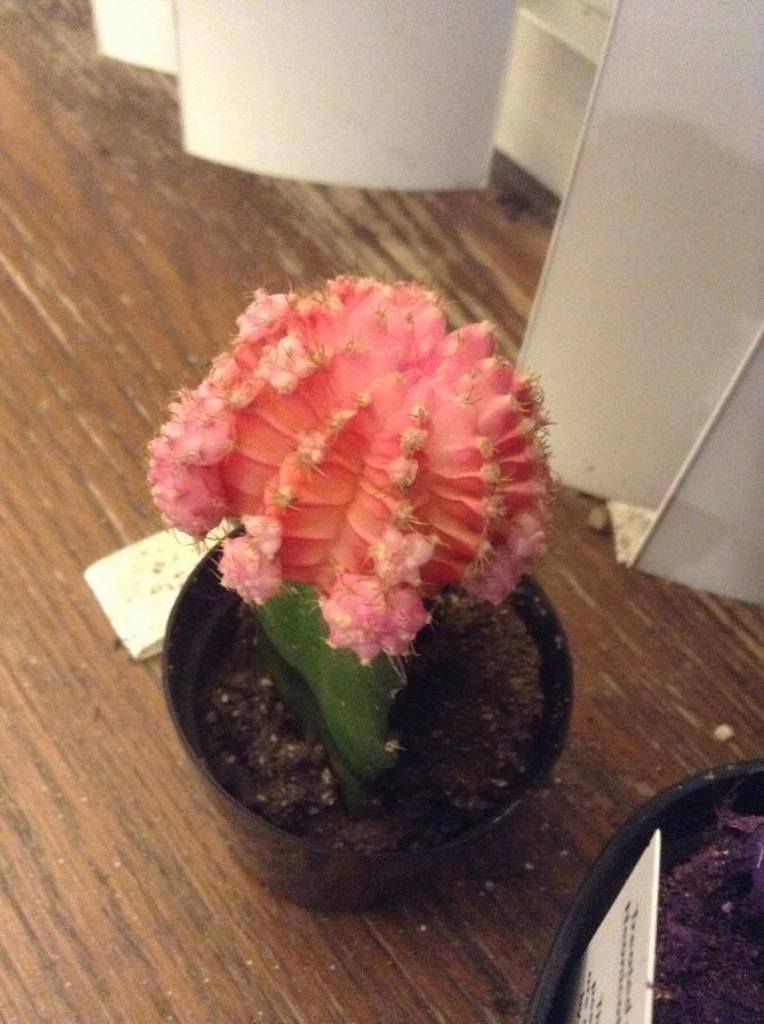
On this page
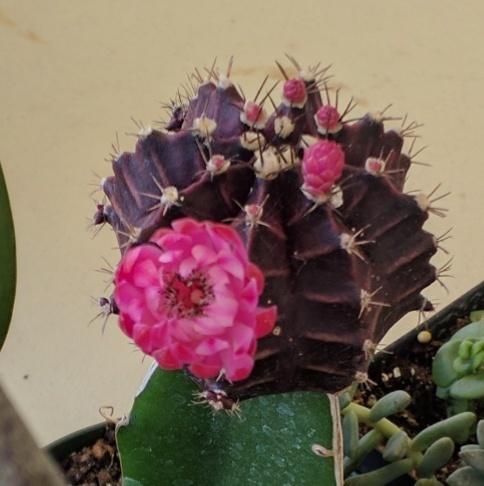
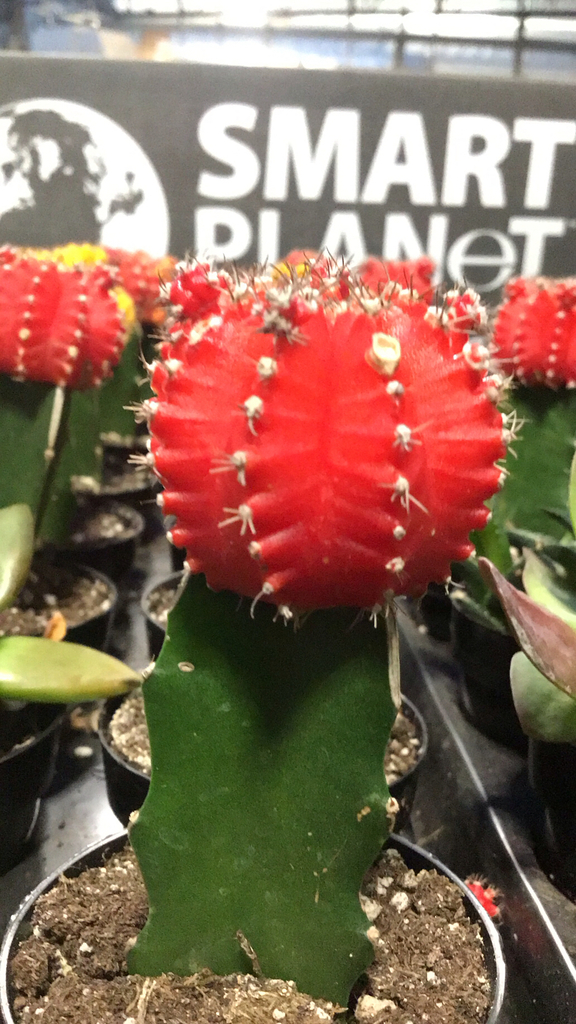
The single most important thing to know before buying: the bright red, pink, orange or yellow ball on top is a mutant with no chlorophyll. It cannot photosynthesise, so it has been grafted onto a separate green cactus that feeds it. That graft is a compromise between two species with different growth rates, and most moon cacti decline within one to three years no matter how well you care for them. Treat it as a colourful short-term plant, not a lifelong one. Typical price is $5-$12.
Key facts
- The coloured top is a chlorophyll-free mutant scion grafted onto a separate green rootstock; without the graft it would die, because it cannot photosynthesise at all.
- The red, pink, orange and yellow colours are the carotenoid and betalain pigments that are normally masked by green chlorophyll.
- Most grafted moon cacti survive only one to three years, because the scion and rootstock grow at different rates and the union eventually fails.
- The green base is usually a fast-growing dragon fruit cactus (Hylocereus), which has different water needs from the desert-type scion on top.
Care requirements#
| Plant type | Indoor grafted cactus; not suited to outdoor growing outside frost-free climates |
| Growing medium | Free-draining cactus and succulent mix |
| Light needs | Bright indirect light; the coloured scion scorches in harsh direct sun and the rootstock etiolates in shade |
| Water frequency | Every 2-3 weeks in summer, monthly or less in winter; let the mix dry out fully |
| Humidity | Low; average indoor air is fine |
| Temperature range | 18-27°C (65-80°F); keep above 10°C (50°F) |
| Fertilizer | Dilute cactus feed once or twice in summer |
| Soil pH | 6.0-7.0 |
| Drainage needs | Very high; water sitting at the graft union causes rot |
| Pot recommendation | Small pot with a drainage hole; the sold plastic pot is usually too small long-term |
| Hardiness zone (outdoor) | USDA 11+ only; grown indoors elsewhere |
| Toxicity | Non-toxic to cats and dogs; the spines are the real hazard, not the sap |
Growth & propagation#
| Mature size | Scion 3-5cm across; whole plant 10-20cm tall |
| Growth rate | Slow for the coloured scion, faster for the green rootstock |
| Propagation methods | Offsets of the coloured scion must be re-grafted onto a fresh green rootstock; they cannot root and grow on their own |
| Propagation difficulty | Advanced: grafting is a manual technique with a real failure rate |
| Repotting schedule | Every 2 years, or when the rootstock outgrows the pot |
| Pruning needs | Remove any green shoots the rootstock sends out below the graft, or they will outcompete the scion |
Common problems & troubleshooting#
| Symptom | Likely cause | Fix |
|---|---|---|
| Coloured top shrivelling or browning while the base looks fine | The graft union is failing, or the scion has outgrown what the rootstock can supply | Often not fixable; the only route is regrafting a healthy offset onto a fresh rootstock |
| Soft, brown, mushy base | Overwatering, especially water pooling at the graft | Water the soil only, never over the plant; cut back frequency drastically and improve drainage |
| Green shoots appearing below the coloured ball | The rootstock is producing its own growth | Cut these off cleanly; left alone they will divert energy from the scion |
| Colour fading or the top going pale and dull | Too little light, or age | Move to a brighter spot with bright indirect light; faded age-related colour will not return |
Know exactly how much water this graft can take
Sodate builds watering quests around your actual light and season, which matters doubly for a plant whose top and bottom halves want different things.
Seasonal care#
Varieties & cultivars#
| Variety | Distinguishing trait | Note |
|---|---|---|
| 'Hibotan' red | The classic scarlet-red scion | The most widely sold form |
| Yellow / orange forms | Carotenoid-dominant scions | Same care, same limited lifespan |
| 'Hibotan Nishiki' variegated | Part-green, part-coloured scion | Retains some chlorophyll, so it can occasionally grow on its own roots |
Buying checklist#
- The graft union is dry, tight and unblemished, with no soft or dark tissue at the join
- The coloured top is firm, not wrinkled or dull
- The green rootstock is upright and firm, not stretched or yellowing
- You understand you are buying a grafted plant with a typical one-to-three-year life, not a long-term cactus
Pricing by region#
| Region | Price range | Typical unit | Basis |
|---|---|---|---|
| US | $5 – $12 | 2-3in pot | Big-box + garden centre retail |
| UK | $5 – $11 | 5.5-8cm pot | Garden centre retail |
| India | $2 – $4 | 3in pot | Urban nursery retail |
| Australia | $6 – $13 | 70-100mm pot | Nursery + garden centre |
| Canada | $5 – $12 | 3in pot | Garden centre retail |
USD figures are approximate conversions for comparison; switch the dropdown to see each region's actual local-currency listing price.
Often confused with#
Name confusion warning#
"Moon cactus" describes a grafting product, not a species. The same label covers red, pink, orange and yellow Gymnocalycium mihanovichii mutants on several different rootstocks, and it is also occasionally applied to Selenicereus. Buy on what you can see at the graft join rather than on the label.
Where it's actually grown#
Moon cacti are produced at scale in commercial nurseries in South Korea, the Netherlands, China and the Americas, where the coloured mutant scions are maintained as offsets and hand-grafted onto young Hylocereus rootstocks. Wild Gymnocalycium mihanovichii is a green plant from Paraguay and Argentina; the coloured mutants exist only in cultivation.
Import & biosecurity restrictions#
| Region | Note |
|---|---|
| Australia | Live cactus imports restricted under biosecurity law; grafted plants are produced domestically. |
| US | Cacti are CITES Appendix II, so commercial imports need permits; domestic retail sale of nursery stock is unrestricted. |
| UK | CITES paperwork applies to commercial cactus imports; retail houseplant sale is unrestricted. |
| India | No restriction on domestic sale; widely available from urban nurseries. |
| Canada | CITES and CFIA permits required for commercial imports; sold widely as a houseplant. |
Similar plants
Ranked in these guides
Did you know?
Frequently asked questions
Why is the moon cactus grafted?
The coloured top has no chlorophyll and cannot photosynthesise, so it cannot survive on its own roots. Grafting it onto a green cactus gives it a food supply.
How long does a moon cactus live?
Usually one to three years. The scion and rootstock grow at different rates and the graft union eventually fails, so decline is expected rather than a care mistake.
Can I grow the coloured top on its own?
No. Without chlorophyll it cannot feed itself. Offsets have to be grafted onto a fresh green rootstock to survive.
Is a moon cactus toxic to pets?
The plant is not toxic to cats or dogs, but the spines can injure paws and mouths, so keep it out of reach.
How much does a moon cactus cost?
Usually $5-$12 in the US for a small potted grafted plant.