 Sodate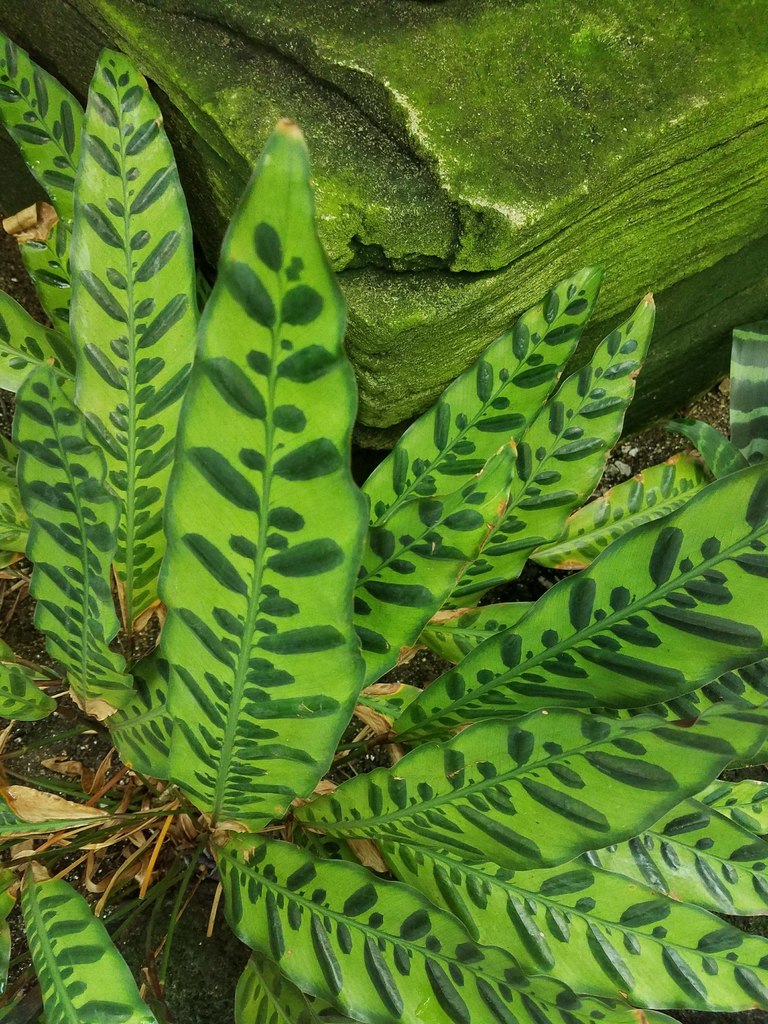
On this page
The rattlesnake plant is pet-safe and beautiful, but it is chemically sensitive to tap water: fluoride, chlorine and dissolved salts cause the crispy brown edges that this plant is notorious for. Use distilled, filtered or rainwater, keep humidity above 50%, give it medium indirect light, and never let the mix dry out completely. It is non-toxic to cats and dogs.
Key facts
- Brown crispy leaf edges are usually a water-quality problem, not underwatering. Fluoride and chlorine in municipal tap water accumulate in the leaf margins and kill the tissue there.
- It is a true prayer plant: the leaves rise at night and lower during the day via a hinge-like pulvinus at the base of each leaf stalk.
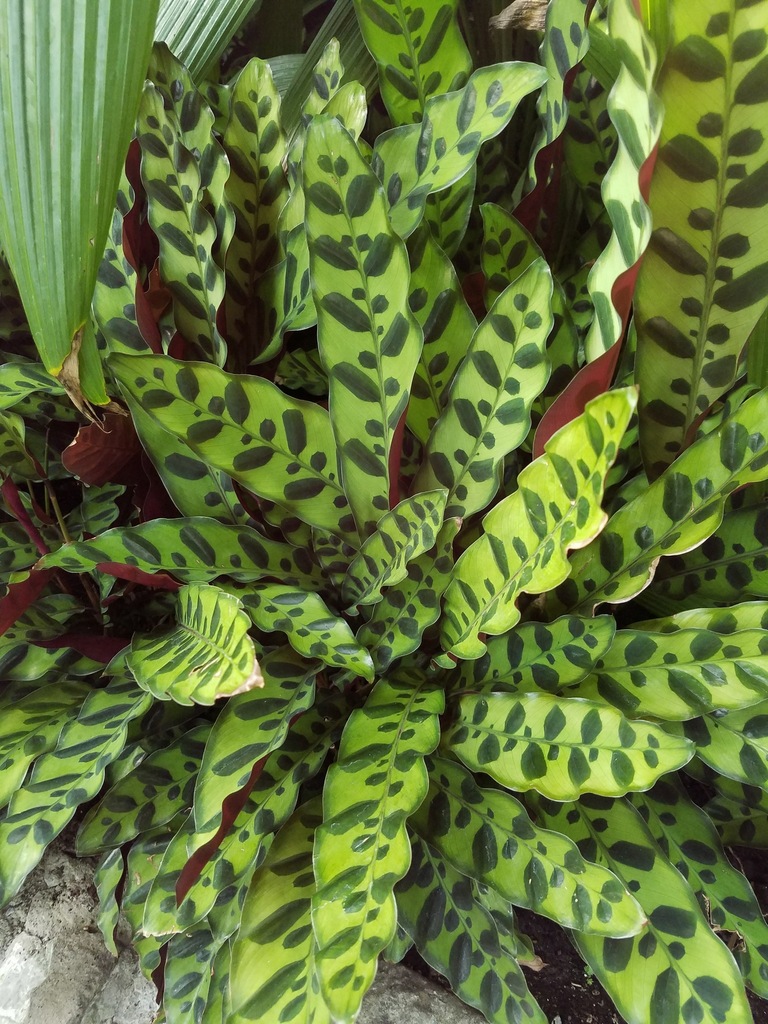
- The alternating large-and-small dark blotches, paired with a solid deep purple underside, are what distinguish it from every other spotted Calathea relative.
- Confirmed non-toxic to cats and dogs by the ASPCA. One of the safest large-leaved foliage plants for pet homes.
Care requirements#
| Plant type | Indoor tropical rhizomatous perennial; a prayer plant in the Marantaceae family |
| Plant group page | Calathea. Shared care principles across the whole prayer-plant group |
| Growing medium | Peat-free mix with coco coir and perlite; must hold moisture without compacting |
| Light needs | Medium to bright indirect light. Direct sun bleaches the pattern and scorches the leaves |
| Water quality | The critical factor. Use distilled, reverse-osmosis, filtered or rainwater. Hard or fluoridated tap water causes brown margins within weeks |
| Water frequency | Every 4-7 days; keep evenly moist, never soggy and never bone dry |
| Humidity | 50-60% minimum; 60%+ is better. Grouping plants or a humidifier works, and pebble trays largely do not |
| Temperature range | 18-27°C (65-80°F); no cold draughts, and nothing below 15°C |
| Fertilizer | Quarter to half-strength balanced liquid feed monthly in spring and summer. It is salt-sensitive, so under-feeding beats over-feeding |
| Soil pH | 6.0-6.5 |
| Drainage needs | Moderate to high, moisture-retentive but never waterlogged |
| Toxicity | Non-toxic to cats, dogs and humans, safe for pet households |
Growth & propagation#
| Mature size | 60-75cm tall and roughly as wide indoors |
| Growth rate | Moderate in spring and summer; near dormant in winter |
| Propagation methods | Division of the rhizome clump at repotting, in spring only |
| Propagation difficulty | Intermediate: divisions sulk and often drop leaves for a few weeks before recovering |
| Repotting schedule | Every 1-2 years in spring; it dislikes being disturbed, so only size up when genuinely rootbound |
| Pruning needs | Trim dead or badly browned leaves at the base; trimming brown tips off is cosmetic and does not stop the cause |
Common problems & troubleshooting#
| Symptom | Likely cause | Fix |
|---|---|---|
| Crispy brown edges around otherwise healthy leaves | Fluoride, chlorine or dissolved salts in tap water, and/or low humidity | Switch to distilled, filtered or rainwater and flush the pot to leach accumulated salts; raise humidity above 50% |
| Leaves curling inwards along the midrib | Underwatering or very dry air. The plant is reducing its exposed surface | Water thoroughly with room-temperature soft water and increase humidity; leaves should relax within a day |
| Faded, washed-out spotting and pale purple undersides | Too much direct light bleaching the pigments | Move out of direct sun to medium indirect light; new leaves will come in with full contrast |
| Sudden yellowing of several lower leaves | Overwatering and stagnant, compacted mix | Let the top 3cm dry before the next watering, check drainage, and repot into a looser coir-and-perlite mix if the soil is dense |
| Fine webbing and stippled leaves | Spider mites, which take hold whenever the air gets dry | Shower the foliage, treat with horticultural soap weekly for three weeks, and correct the humidity |
Crispy edges aren't always thirst
Sodate factors your water type and humidity into this plant's care quests, so you fix the real cause instead of watering more.
Seasonal care#
Varieties & cultivars#
| Variety | Distinguishing trait | Note |
|---|---|---|
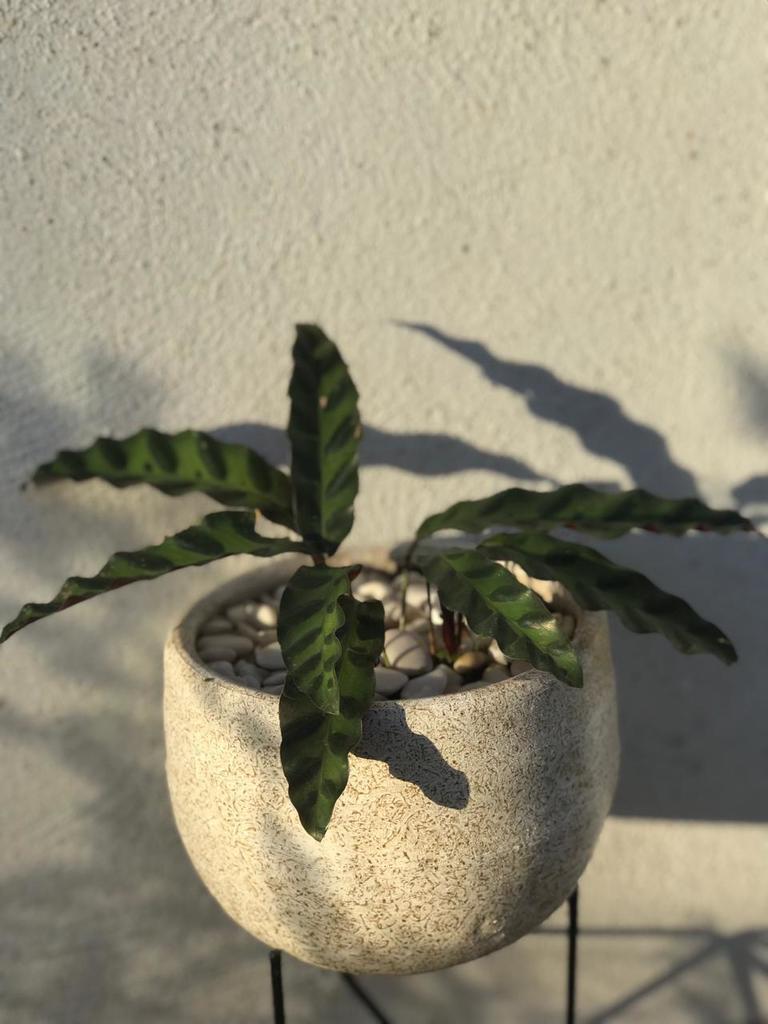
| Goeppertia insignis (this plant) | Wavy narrow leaves, alternating large and small spots, purple underside | Sold as Calathea lancifolia; the classic rattlesnake plant |
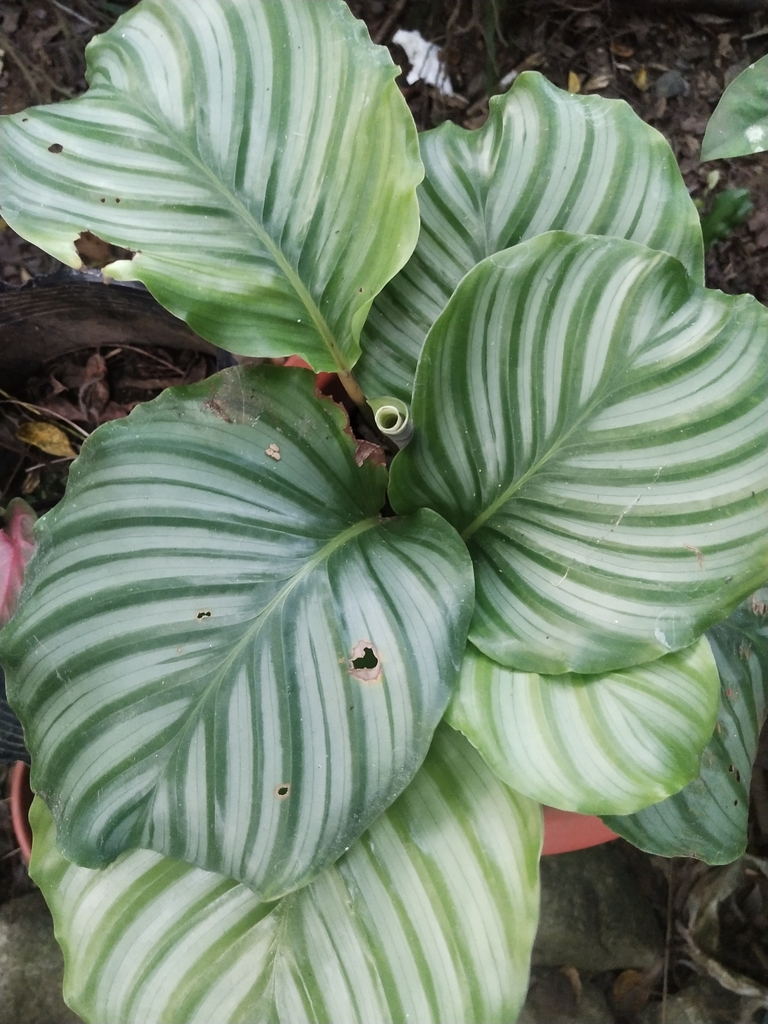
| Goeppertia orbifolia | Large round leaves with broad silver bands | Bigger and slightly more forgiving of dry air |
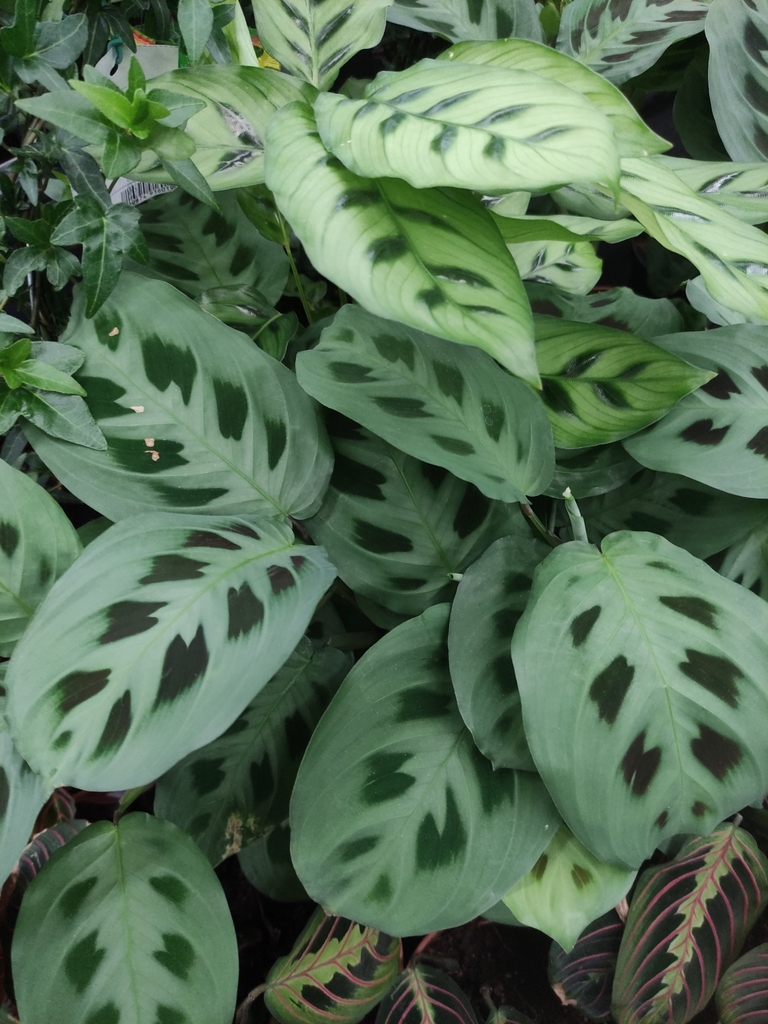
| Goeppertia makoyana (Peacock Plant) | Thin, translucent leaves with feathered dark markings | The most humidity-sensitive of the common Calatheas |
| Calathea roseopicta 'Medallion' | Rounded leaves with a pink-to-cream ring | Similar water-quality sensitivity |
Buying checklist#
- Leaf edges are green and intact all the way around. Existing brown margins never heal
- Undersides are a strong solid purple, not a weak greenish-mauve
- Several new leaves are unfurling from the centre, showing the plant is actively growing
- Mix is moist rather than bone dry; a badly dried-out Calathea rarely recovers fully
- No webbing between the leaf stalks
Pricing by region#
| Region | Price range | Typical unit | Basis |
|---|---|---|---|
| US | $12 – $35 | 6in pot | Big-box + nursery retail |
| UK | $11 – $30 | 14-17cm pot | Garden centre retail |
| India | $4 – $12 | 6in pot | Urban nursery retail |
| Australia | $15 – $38 | 175mm pot | Nursery retail |
| Canada | $14 – $35 | 6in pot | Garden centre retail |
USD figures are approximate conversions for comparison; switch the dropdown to see each region's actual local-currency listing price.
Often confused with#
Name confusion warning#
Most retailers still label this Calathea lancifolia, but the species was formally moved to the genus Goeppertia as G. insignis. Both names refer to the same plant, so do not pay a premium for one over the other.
Where it's actually grown#
Nearly all retail rattlesnake plants are tissue-cultured in the Netherlands, Costa Rica and Southeast Asia, then finished in regional greenhouses at high humidity. Which is exactly why a freshly bought plant often browns as soon as it reaches an ordinary living room.
Import & biosecurity restrictions#
| Region | Note |
|---|---|
| Australia | Live plant imports restricted under biosecurity law; domestic tissue-culture stock is widely available. |
| US | Domestic sale unrestricted; imports need a USDA phytosanitary certificate. |
| UK | Plant health certificates required for imports; domestic sale unrestricted. |
| India | No restriction. Indian tap water is often hard, so filtered or RO water matters even more here. |
| Canada | CFIA import permit required for commercial imports; domestic sale unrestricted. |
Similar plants
Ranked in these guides
Did you know?
Frequently asked questions
Why does my rattlesnake plant get brown crispy edges?
Usually the water. Fluoride, chlorine and dissolved salts in tap water build up in the leaf margins and kill the tissue. Switch to distilled, filtered or rainwater and raise humidity above 50%.
Is the rattlesnake plant safe for cats and dogs?
Yes. Goeppertia insignis is listed as non-toxic to cats and dogs, making it one of the safest large foliage plants for pet homes.
Is the rattlesnake plant the same as a Calathea?
Effectively yes. It was classified as Calathea lancifolia and is now Goeppertia insignis, but it belongs to the same prayer-plant group and shares its care requirements.
Why are my rattlesnake plant's leaves curling?
Curling inwards along the midrib means the plant is short of water or the air is too dry. Water thoroughly with soft, room-temperature water and increase humidity.
How much light does a rattlesnake plant need?
Medium to bright indirect light. Direct sun bleaches the dark spotting and scorches the leaf, while deep shade makes growth thin and slow.