 Sodate
On this page
Black-eyed Susan is a prairie native that thrives on neglect: full sun, ordinary or poor well-drained soil, no feeding, and little water once established. It flowers from midsummer to frost and is a heavy pollinator draw, then feeds finches on its seed heads over winter. Non-toxic to pets and people. Very easy from seed, and it self-sows to keep itself going. Typically $6-$18 a plant.
Key facts
- Native to the prairies and open ground of central and eastern North America, and now naturalised far more widely.
- It flowers relentlessly from midsummer to first frost, one of the longest bloom seasons of any native perennial.
- Drought-tolerant and happiest in lean soil; rich, fertilised ground makes it floppy and short-lived.
- Left standing, the dark seed cones feed goldfinches through winter.
- Non-toxic to cats, dogs and humans.
Care requirements#
| Plant type | Short-lived perennial or biennial, often grown as an annual; hardy USDA 3-9 |
| Native range | Central and eastern North America, in prairie, meadow and disturbed open ground |
| Light needs | Full sun. At least six hours; it stretches and flops in shade |
| Soil | Average to poor, well-drained soil; tolerates clay far better than most prairie natives |
| Soil pH | 6.0-7.5, adaptable across slightly acidic to neutral |
| Water needs | Water through the first season, then only in extended drought |
| Spacing | 30-45cm apart for airflow |
| Fertilizer | None needed; feeding produces weak, floppy stems and fewer flowers |
| Deadheading | Deadhead through summer to extend flowering, then leave late heads for seed and birds |
| Winter care | Leave stems standing for finches and overwintering insects; cut back in early spring |
| Wildlife value | Heavy nectar draw for bees and butterflies, a larval host for silvery checkerspot, and winter seed for finches |
| Toxicity | Non-toxic to cats, dogs, and humans |
Growth & propagation#
| Mature size | 60-90cm tall and 30-45cm wide |
| Growth rate | Fast: often flowers in its first year from an early spring sowing |
| Lifespan | Short-lived, typically 2-3 years, but it self-sows persistently |
| Propagation methods | Seed, surface-sown; cold stratification improves but is not essential for germination |
| Propagation difficulty | Very easy. Among the simplest native perennials to raise from seed |
| Self-seeding | Self-sows freely, which is how a planting sustains itself long-term |
Common problems & troubleshooting#
| Symptom | Likely cause | Fix |
|---|---|---|
| Dark brown or black leaf spots spreading upward | Septoria or angular leaf spot, common in humid summers | Space plants for airflow, water at the base rather than overhead, and remove affected foliage |
| White powdery film on leaves | Powdery mildew in crowded, humid plantings | Thin the planting and improve air circulation; it is disfiguring rather than fatal |
| Tall stems flopping over | Rich soil, over-feeding, or insufficient sun | Stop feeding and grow in leaner soil and full sun |
| Plants disappear after two or three years | Normal short lifespan | Let seed heads mature and self-sow, or resow every couple of years |
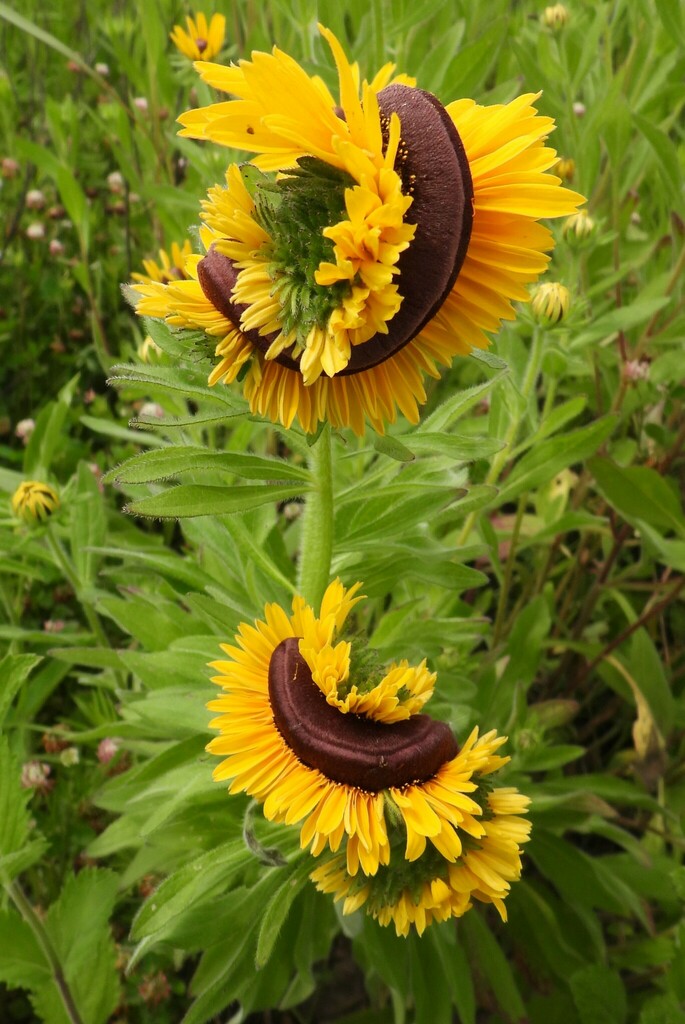
| Distorted growth and green flower centres | Aster yellows, spread by leafhoppers | No cure. Remove and destroy affected plants to protect neighbours |
Some plants want you to do less
Sodate separates the plants that need attention from the natives that thrive when you leave them alone.
Seasonal care#
Varieties & cultivars#
| Variety | Distinguishing trait | Note |
|---|---|---|
| R. hirta (straight species) | Golden petals, dark brown cone | Best for pollinators and self-sowing |
| 'Indian Summer' | Very large golden flowers to 15cm | Award-winning and widely grown |
| 'Cherokee Sunset' | Mixed bronze, orange and mahogany semi-doubles | Showy but less useful to pollinators than singles |
| Rudbeckia fulgida 'Goldsturm' | Longer-lived true perennial with smaller flowers | A different species often sold under the same common name |
Buying checklist#
- Choose the species or single-flowered cultivars for pollinator value
- Foliage free of spreading dark leaf spot
- Compact bushy plants rather than tall, stretched, pale growth
- Confirm neonicotinoid-free if the plants are for a pollinator garden
Pricing by region#
| Region | Price range | Typical unit | Basis |
|---|---|---|---|
| US | $6 – $18 | 1 gallon pot | Nursery + native plant sales |
| UK | $7 – $20 | 2L pot | Garden centre retail |
| India | $2 – $8 | potted plant | Nursery retail (grown as annual) |
| Australia | $8 – $20 | 150mm pot | Nursery retail |
| Canada | $8 – $20 | 1 gallon pot | Nursery retail (native) |
USD figures are approximate conversions for comparison; switch the dropdown to see each region's actual local-currency listing price.
Often confused with#
Name confusion warning#
'Black-eyed Susan' also refers to the unrelated climbing Thunbergia alata (black-eyed Susan vine), a tender vine with completely different care. Rudbeckia hirta is the prairie perennial.
Where it's actually grown#
Commercial stock is seed-grown by perennial nurseries and wildflower seed producers across North America and Europe; it is a staple of prairie restoration and roadside seed mixes.
Import & biosecurity restrictions#
| Region | Note |
|---|---|
| US | Native and unrestricted; the state flower of Maryland and a mainstay of native seed mixes. |
| Canada | Native across much of southern Canada and unrestricted; hardy to zone 3. |
| UK | Imports need phytosanitary paperwork; commonly grown as a garden annual or short-lived perennial. |
| Australia | Live plant imports restricted under biosecurity law; seed and plants are available domestically. |
| India | No specific restriction; grown as a cool-season annual and in hill stations. |
Similar plants
Ranked in these guides
Did you know?
Frequently asked questions
Is black-eyed Susan toxic to cats or dogs?
No, Rudbeckia hirta is non-toxic to cats, dogs and humans.
Do black-eyed Susans come back every year?
Individual plants are short-lived, often lasting two or three years, but they self-sow so freely that a planting sustains itself if you let the seed heads mature.
How much water does black-eyed Susan need?
Water through the first season, then only in extended drought. It is a drought-tolerant prairie native.
Should I deadhead black-eyed Susans?
Deadhead through summer to prolong flowering, but stop in autumn so the seed heads can feed goldfinches and self-sow.
Why are my black-eyed Susans getting black spots on the leaves?
Fungal leaf spot, common in humid weather and crowded plantings. Space plants out, water at the base rather than overhead, and remove affected leaves.