 Sodate
On this page
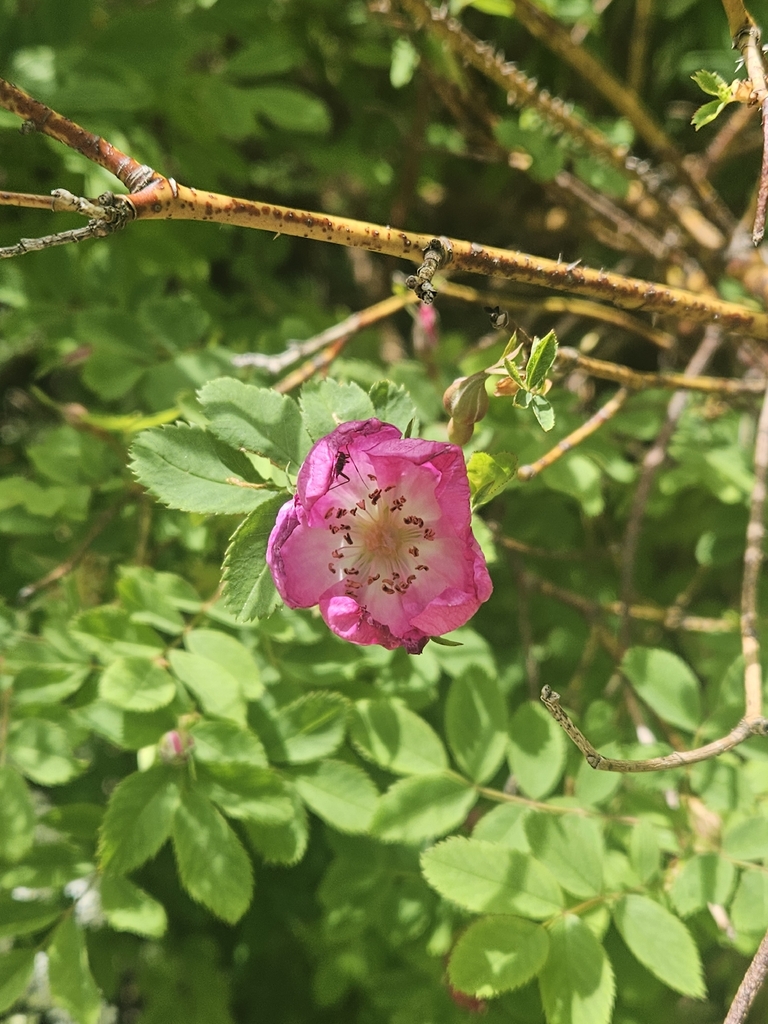
Peonies are forgiving once planted and famously long-lived, often flowering for fifty years or more from a single planting. The one thing to get right is depth: set the eyes just 3-5cm below the surface, because planting too deep is the main reason a peony grows leaves and never flowers. They need cold winters (USDA zones 3-8, RHS H6-H7) and full sun, and they resent being moved. Ants crawling on the buds are harmless and need no treatment. Mildly toxic to cats and dogs. Roots cost $15-$40.
Key facts
- Extremely long-lived. Established clumps commonly flower for 50 years and some documented plantings exceed a century, so peonies are frequently inherited rather than replaced.
- Planting depth decides everything: the growth buds (eyes) must sit only 3-5cm below the soil surface. Deeper planting produces healthy foliage and no flowers, year after year.
- Ants on peony buds are harmless. They are feeding on sugary nectar the bud secretes and they do not damage the plant or cause it to open. Do not spray them.
- Needs winter chill: roughly 500-1,000 hours below 7°C to flower properly, which is why peonies fail in warm-winter climates.
Care requirements#
| Plant type | Herbaceous perennial (also tree peony and intersectional Itoh types); extremely long-lived |
| Growing medium | Deep, fertile, free-draining soil enriched with well-rotted compost |
| Light needs | Full sun, at least 6 hours; light afternoon shade is acceptable in hot regions |
| Planting depth | Eyes 3-5cm below the surface in cold zones, and no more than 2-3cm in warmer zones |
| Planting time | Autumn, so roots establish before winter; container plants can go in during spring |
| Water frequency | Deep watering weekly in dry weather during spring growth and flowering; drought-tolerant once established |
| Hardiness zone (USDA) | 3-8; needs roughly 500-1,000 chill hours below 7°C to flower |
| Hardiness zone (RHS) | H6-H7. Fully hardy across the UK |
| Bloom season | Late spring to early summer, over about 7-10 days per cultivar |
| Fertilizer | Low-nitrogen feed or bonemeal in early spring and again after flowering; too much nitrogen gives leaves and no flowers |
| Soil pH | 6.5-7.0 (neutral) |
| Toxicity | Mildly toxic to cats and dogs; paeonol in the roots and bark causes vomiting and diarrhoea if eaten in quantity |
Growth & propagation#
| Mature size | 60-100cm tall and wide for herbaceous types; tree peonies to 1.8m |
| Growth rate | Slow to establish. Typically 3 years from planting to a full display |
| Propagation methods | Division of the crown in autumn, keeping 3-5 eyes per piece; tree peonies are grafted |
| Propagation difficulty | Moderate: division is straightforward but the plant sulks for two or three years afterwards |
| Repotting schedule | Avoid moving established plants; if you must, lift in autumn and replant at the same shallow depth |
| Pruning timing | Cut herbaceous peonies right down to 3-5cm above ground in late autumn once the foliage has yellowed, and bin the material to reduce peony wilt. Do not cut back in summer, as the foliage is recharging the crown. Tree peonies are different: prune them only lightly, after flowering, and never cut them to the ground. |
Common problems & troubleshooting#
| Symptom | Likely cause | Fix |
|---|---|---|
| Healthy leaves but no flowers | Planted too deep, the single most common cause, or too much shade, too much nitrogen, or a clump moved too recently | Lift in autumn and replant with the eyes 3-5cm below the surface; otherwise give it more sun and switch to a low-nitrogen feed |
| Ants swarming over the buds | Nothing. The ants are drinking nectar from the bud | Leave them alone. They do not harm the plant and the buds open perfectly well without them. No treatment is needed. |
| Buds turn brown and shrivel before opening | Peony wilt (Botrytis paeoniae), or a late frost | Cut affected stems to the base and bin them, clear all foliage in autumn, and improve airflow around the clump |
| Stems flopping under the weight of the flowers | Heavy double cultivars plus rain | Place a grow-through support ring over the crown in early spring, before the shoots are 20cm tall |
Get the depth right once, enjoy it for decades
Sodate walks you through planting depth and autumn timing, then keeps the yearly cut-back and feed on schedule.
Seasonal care#
Varieties & cultivars#
| Variety | Distinguishing trait | Note |
|---|---|---|
| 'Sarah Bernhardt' | Large pink double, strongly scented | The most widely planted peony in the world, dating to 1906 |
| 'Karl Rosenfield' | Deep crimson double, strong stems | Less prone to flopping than most doubles |
| Itoh (intersectional) hybrids | Tree peony flowers on a herbaceous frame, strong stems | Expensive but need no staking and flower for longer |
| Tree peony (Paeonia suffruticosa) | Woody framework, huge flowers | Never cut to the ground; prune lightly after flowering only |
Buying checklist#
- Bare-root divisions with 3-5 plump eyes; fewer than three means waiting extra years for flowers
- Roots firm and pale, with no soft brown patches or mould
- Buy in autumn for bare-root planting, which establishes far better than a spring pot
- For warm regions, check the cultivar's chill requirement before buying
Pricing by region#
| Region | Price range | Typical unit | Basis |
|---|---|---|---|
| US | $15 – $40 | 3-5 eye bare-root | Mail-order + garden centre retail |
| UK | $12 – $35 | bare-root or 3L pot | Garden centre retail |
| India | $6 – $20 | imported root | Hill-station nursery retail |
| Australia | $18 – $50 | bare-root | Nursery + mail order |
| Canada | $18 – $45 | 3-5 eye bare-root | Garden centre retail |
USD figures are approximate conversions for comparison; switch the dropdown to see each region's actual local-currency listing price.
Often confused with#
Where it's actually grown#
Peony roots are field-grown for several years before lifting, mainly in the Netherlands, Poland, China and Alaska, which has become a significant late-season cut-flower producer because its long cool days push flowering into July when nowhere else has peonies.
Import & biosecurity restrictions#
| Region | Note |
|---|---|
| Australia | Imported roots subject to quarantine; Victorian and Tasmanian growers supply the domestic bare-root season. |
| US | Unrestricted domestic sale; thrives across the northern states and struggles below zone 8. |
| UK | No restriction; bare-root roots sold in autumn, potted plants year-round. |
| India | Imported roots sold for Himalayan hill gardens; the plains do not provide enough winter chill. |
| Canada | CFIA rules apply to commercial imports; peonies are exceptionally well suited to Canadian winters. |
Similar plants
Ranked in these guides
Did you know?
Frequently asked questions
Do ants on peony buds need treating?
No. This is the most common peony question and the answer is simply to leave them alone. Ants are feeding on nectar the bud secretes. They do not damage the plant, they are not needed for the flower to open, and spraying them achieves nothing.
Why won't my peony flower?
Almost always because it is planted too deep. The eyes must sit only 3-5cm below the soil surface. Other causes are too much shade, high-nitrogen feed, insufficient winter chill, or a clump that was divided or moved within the last three years.
How deep should I plant a peony?
With the growth buds (eyes) just 3-5cm below the surface in cold zones, and 2-3cm in warmer ones. This is much shallower than most perennials, and getting it wrong costs you years of flowers.
How long do peonies live?
Decades. Fifty years is routine for a well-sited clump and some documented plants have passed a hundred, which means a peony often outlives the person who planted it.
Are peonies toxic to cats and dogs?
Mildly. Peonies contain paeonol, concentrated in the roots and bark, which causes vomiting and diarrhoea if eaten in quantity. They are not among the dangerous garden plants, but dogs that dig should be discouraged.