 Sodate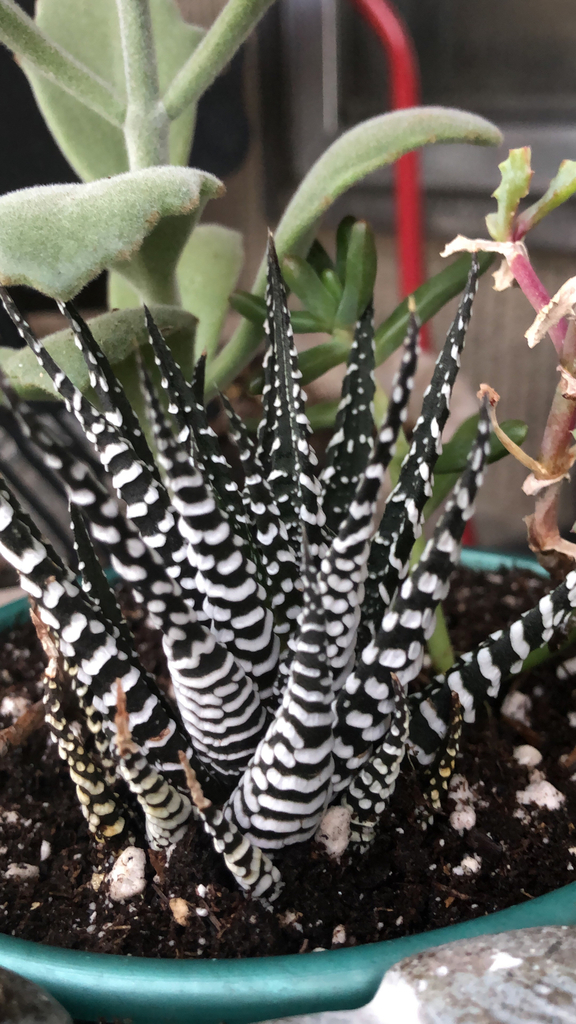
On this page
Zebra haworthia is a genuinely beginner-friendly succulent: it stays under 15cm, tolerates far less light than an echeveria or aloe, and is hard to kill as long as you let the soil dry out completely between waterings. It is non-toxic to cats and dogs, offsets freely so you get free plants, and typically costs $6-$15. The main way people lose it is overwatering, not neglect.
Key facts
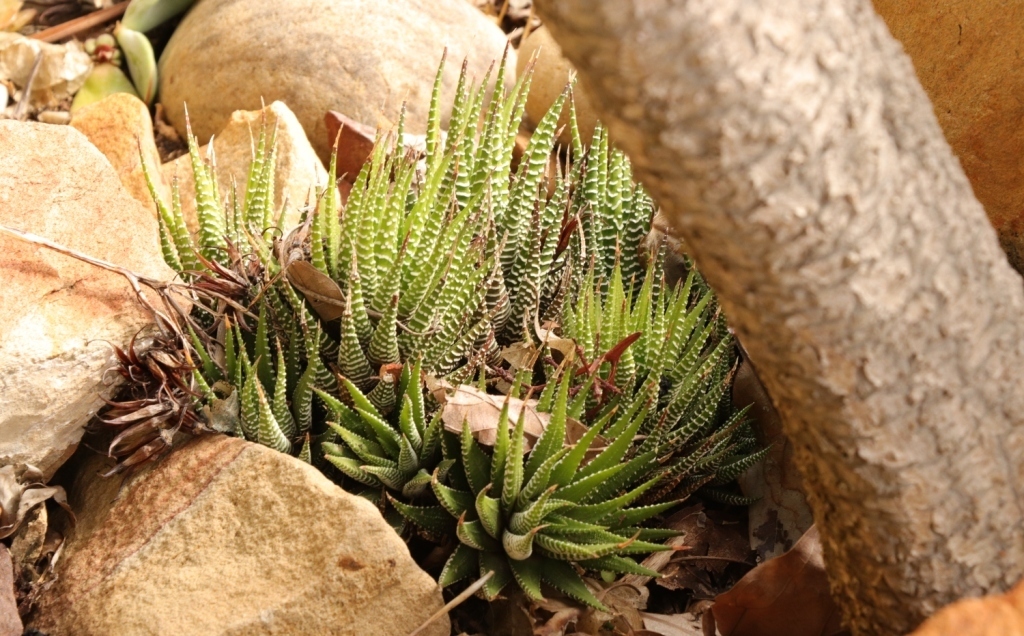
- Native to a small area of the Eastern Cape in South Africa, where it grows in rock crevices and under shrubs rather than in open desert.
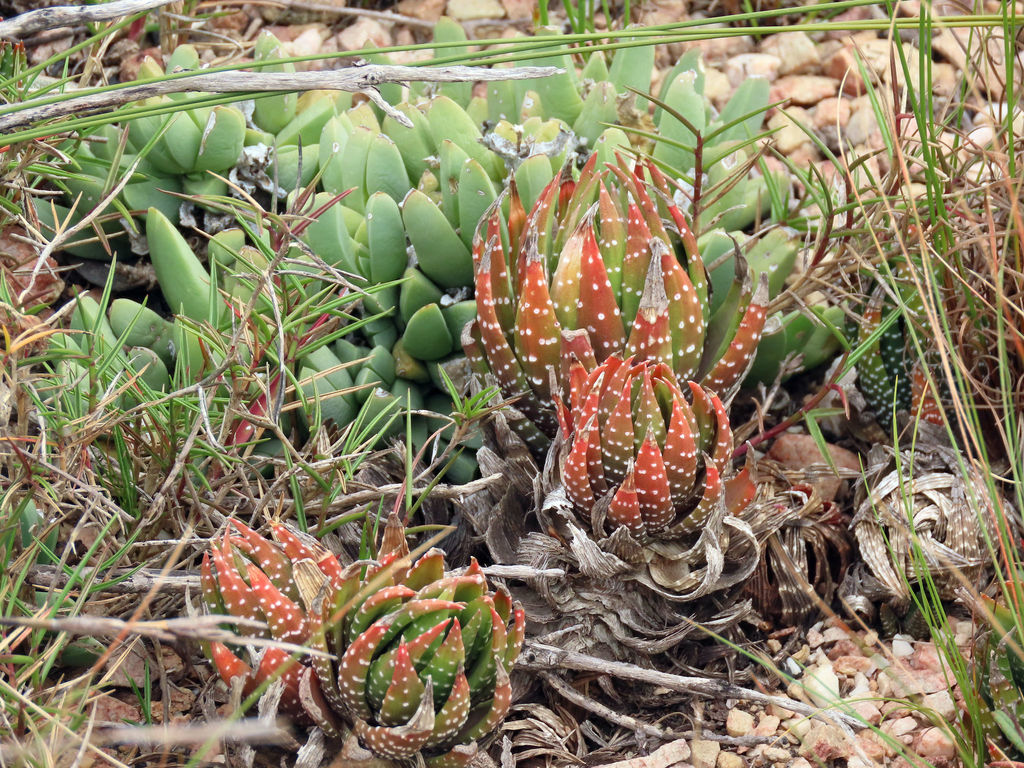
- The white bands are raised tubercles on the leaf surface, not markings or variegation, so they cannot be washed or faded off.
- Tolerates lower light than most succulents because it grows shaded in habitat, which makes it one of the few succulents that works away from a south window.
- Non-toxic to cats and dogs, unlike aloe vera, which it is frequently mistaken for.
Care requirements#
| Plant type | Indoor succulent; can summer outdoors in shade in warm climates |
| Growing medium | Gritty cactus and succulent mix, ideally with extra perlite or pumice |
| Light needs | Bright indirect light; tolerates medium light, but harsh direct sun reddens and scorches leaves |
| Water frequency | Every 2-3 weeks in summer, every 4-6 weeks in winter; soak, then let dry completely |
| Humidity | Low; normal dry indoor air is ideal |
| Temperature range | 15-27°C (59-80°F); keep above 5°C (41°F) |
| Fertilizer | Dilute cactus feed twice in spring and summer; none in winter |
| Soil pH | 6.0-7.5 |
| Drainage needs | Very high. A drainage hole is essential |
| Pot recommendation | Small shallow terracotta pot only slightly wider than the rosette |
| Hardiness zone (outdoor) | USDA 10-11 outdoors; grown indoors elsewhere |
| Toxicity | Non-toxic to cats, dogs, and humans |
Growth & propagation#
| Mature size | 10-15cm wide, 10-20cm tall including flower spike |
| Growth rate | Slow: expect a few new leaves per year |
| Propagation methods | Offsets (pups) separated from the base of the parent clump |
| Propagation difficulty | Beginner-friendly; pups often already have roots when separated |
| Repotting schedule | Every 2-3 years, or when the clump fills the pot |
| Pruning needs | Minimal; remove dried outer leaves and spent flower spikes |
Common problems & troubleshooting#
| Symptom | Likely cause | Fix |
|---|---|---|
| Translucent, mushy lower leaves | Overwatering and rot at the base | Stop watering, unpot and check roots, cut away rotted tissue and repot in dry gritty mix |
| Leaves turning red or purple-brown | Too much direct sun | Move back from the glass to bright indirect light; colour usually fades over a few months |
| Stretched, pale rosette with wide leaf gaps | Not enough light (etiolation) | Move somewhere brighter; the stretched growth will not shrink back, but new growth will be compact |
| Shrivelled, wrinkled leaves that stay firm | Genuine underwatering, or dead roots that cannot take up water | Soak thoroughly; if it does not plump up in a week, check the roots |
Stop killing succulents with kindness
Sodate watches your light and season and only asks you to water when the plant actually needs it, which for a haworthia is far less often than you think.
Seasonal care#
Varieties & cultivars#
| Variety | Distinguishing trait | Note |
|---|---|---|
| Haworthiopsis attenuata var. attenuata | Standard form with tubercles on both leaf surfaces | The usual retail plant |
| 'Concolor' | Bands reduced to fine scattered dots | Subtler look, same care |
| 'Super White' | Thick, heavily fused white banding | Costs more than the standard form |
Buying checklist#
- Leaves are firm and stiff, with no translucent or soft patches near the base
- Rosette is compact rather than stretched and pale
- Soil is dry to the touch and the pot has a drainage hole
- Pups at the base are a bonus. They can be separated into free plants
Pricing by region#
| Region | Price range | Typical unit | Basis |
|---|---|---|---|
| US | $6 – $15 | 3-4in pot | Big-box + nursery retail |
| UK | $5 – $13 | 8-11cm pot | Garden centre retail |
| India | $2 – $5 | 4in pot | Urban nursery retail |
| Australia | $6 – $14 | 100mm pot | Nursery + garden centre |
| Canada | $6 – $14 | 4in pot | Garden centre retail |
USD figures are approximate conversions for comparison; switch the dropdown to see each region's actual local-currency listing price.
Often confused with#
Name confusion warning#
Sold interchangeably as Haworthia fasciata, Haworthiopsis fasciata and "zebra plant". "Zebra plant" is also the common name for Aphelandra squarrosa, a completely unrelated tropical plant with very different (much fussier) care. Check for a succulent rosette, not soft green leaves, before buying on the common name.
Where it's actually grown#
Almost all retail zebra haworthia is nursery-propagated from offsets or tissue culture in the Netherlands, China, Korea and the US. Wild Haworthiopsis attenuata has a restricted Eastern Cape range and wild collection is not a legitimate source for houseplant stock.
Import & biosecurity restrictions#
| Region | Note |
|---|---|
| Australia | Live plant imports restricted under biosecurity law; propagated domestically and widely sold. |
| US | Domestic sale unrestricted; nursery-propagated stock is standard. |
| UK | No specific restriction on nursery-propagated plants; grown as a houseplant. |
| India | No restriction; suits India's dry indoor conditions well. |
| Canada | CFIA permits required for commercial imports; sold widely as a houseplant. |
Similar plants
Ranked in these guides
Did you know?
Frequently asked questions
Is zebra haworthia safe for cats and dogs?
Yes. It is non-toxic to cats and dogs, which makes it a good swap for aloe vera in a pet household.
How often should I water a zebra haworthia?
Roughly every 2-3 weeks in summer and every 4-6 weeks in winter. Always let the soil dry out completely first rather than following a fixed schedule.
Why are my zebra haworthia leaves turning red?
Too much direct sun. Move it back from the window into bright indirect light and the colour will fade over the following months.
Does zebra haworthia need direct sunlight?
No. It grows shaded under shrubs in habitat and does better in bright indirect light than in hot direct sun.
How much does a zebra haworthia cost?
A 3-4 inch potted plant is usually $6-$15 in the US; named white-form cultivars cost more.