 Sodate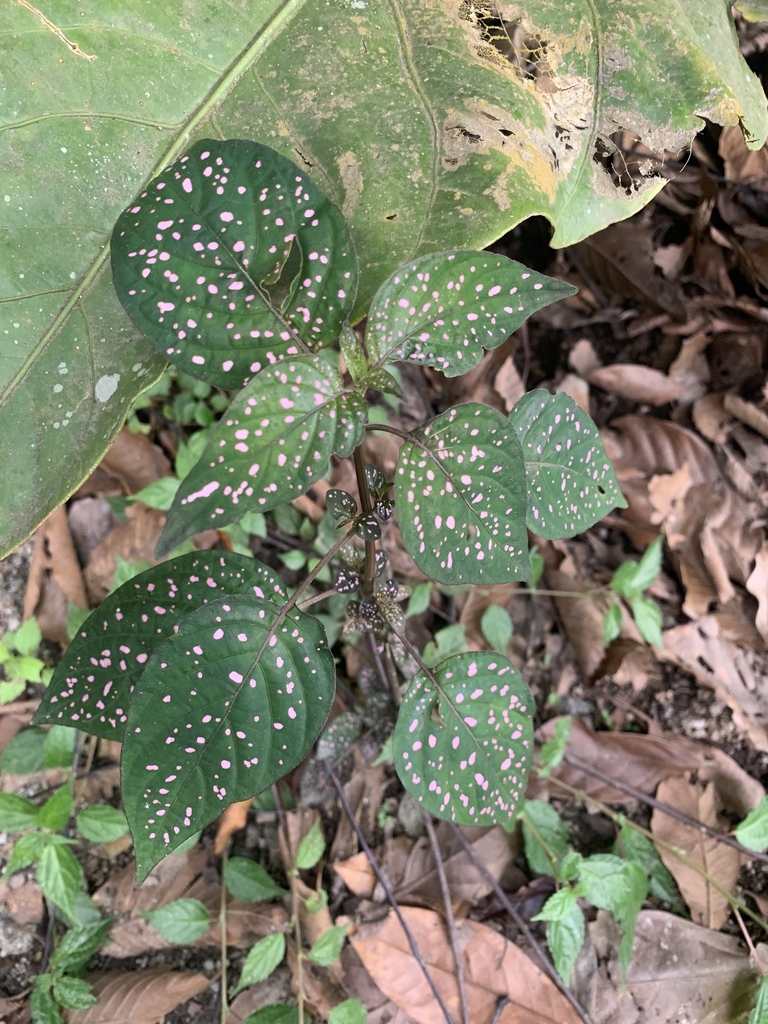
On this page
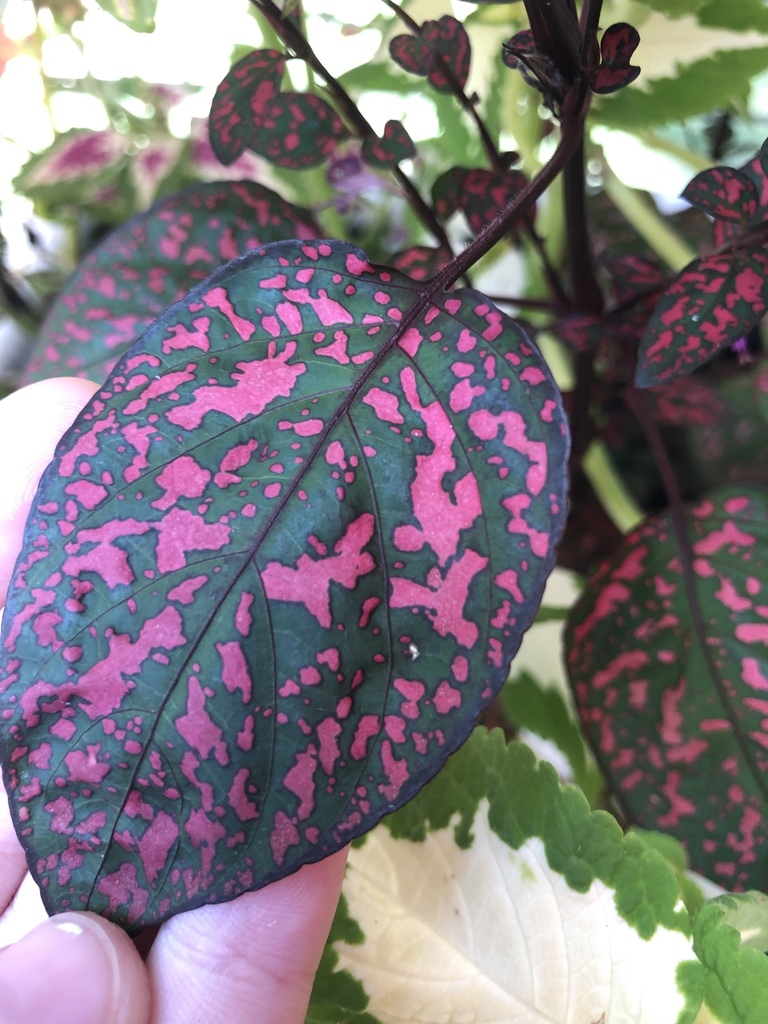
The polka dot plant is an easy, cheap, colourful little plant that is non-toxic to cats and dogs, which makes it a good pick for a pet household. Two things to know: it needs bright indirect light to keep its speckles (in shade it reverts towards plain green), and it wilts fast when the soil dries out, though it usually bounces back within hours of watering. Pinch it regularly or it goes leggy and flowers, after which it declines. Cuttings root in about two weeks. Typical price $5-$12.
Key facts
- Non-toxic to cats, dogs and humans, which is unusual among brightly patterned foliage plants.
- The pink, white or red speckling fades toward plain green in low light, so brightness directly controls how colourful the plant looks.
- It wilts dramatically within hours of the soil drying out, then recovers quickly once watered, which makes it a useful visual moisture gauge.
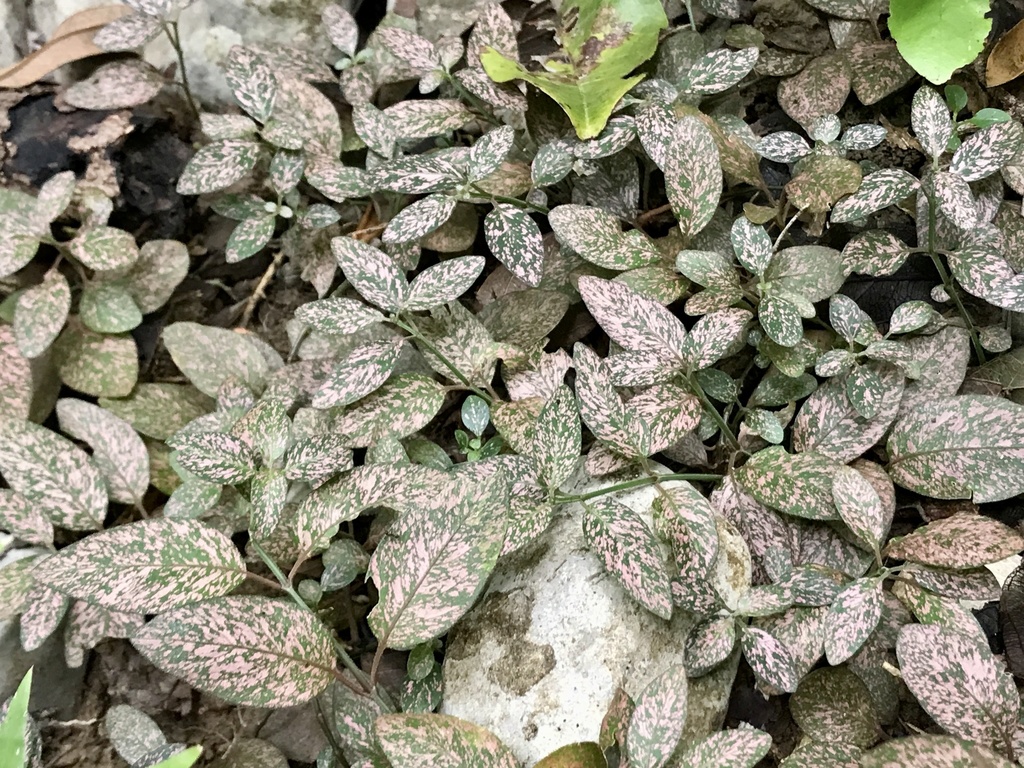
- Naturalised and considered an environmental weed in parts of Australia, Queensland especially, and on several Pacific islands.
Care requirements#
| Plant type | Indoor foliage perennial; grown as a summer bedding annual in cool climates |
| Growing medium | Standard peat-free potting mix with perlite |
| Light needs | Bright indirect light; the speckling fades in shade and bleaches in direct sun |
| Water frequency | Every 3-5 days; keep evenly moist and do not let the pot dry out fully |
| Humidity | 50%+ preferred; browning leaf tips are the first sign the air is too dry |
| Temperature range | 18-27°C (65-80°F); keep above 13°C (55°F) |
| Fertilizer | Balanced liquid feed at half strength monthly through spring and summer |
| Soil pH | 5.5-6.5 |
| Drainage needs | Moderate to high; the soft stems rot in waterlogged mix |
| Pot recommendation | Small plastic or glazed pot with drainage that holds moisture |
| Hardiness zone (outdoor) | USDA 10-11; grown indoors or as an annual elsewhere |
| Toxicity | Non-toxic to cats, dogs and humans |
Growth & propagation#
| Mature size | 20-30cm tall and wide indoors |
| Growth rate | Fast in spring and summer |
| Propagation methods | Stem cuttings in water or moist mix; also grows readily from seed |
| Propagation difficulty | Beginner-friendly; cuttings root in about two weeks |
| Repotting schedule | Annually; many growers simply replace the plant with a rooted cutting |
| Pruning needs | Pinch the tips every few weeks and remove flower spikes, which trigger decline |
Common problems & troubleshooting#
| Symptom | Likely cause | Fix |
|---|---|---|
| Whole plant collapsed and limp | The pot dried out | Water thoroughly; it usually recovers within a few hours, but repeated wilting costs lower leaves |
| Speckles fading and leaves turning plain green | Not enough light | Move to a brighter position with bright indirect light; new growth will come back speckled |
| Bleached, washed-out leaves | Direct sun through glass | Move back from the window or filter the light with a sheer curtain |
| Leggy stems with bare bases and flower spikes | Natural maturing without pinching | Cut back hard, remove the flower spikes, and root the trimmings as replacements |
| Brown crisp leaf tips | Dry air or inconsistent watering | Raise humidity and water on a steadier rhythm |
It wilts before it tells you anything else
Sodate builds watering quests around your actual light and season, so you catch this one before the dramatic collapse.
Seasonal care#
Varieties & cultivars#
| Variety | Distinguishing trait | Note |
|---|---|---|
| 'Splash' series | Broad pink, white or red splashes | The most widely sold seed strain |
| 'Confetti' series | Finer, denser freckling | Compact and good for small pots |
| 'Carmina' | Deep red spotting on dark green | Holds colour well in decent light |
Buying checklist#
- Speckling is strong and evenly distributed, not faded toward green
- The plant is bushy from the base rather than a few tall stems
- No flower spikes present, as flowering starts the decline
- Soil is moist, and the plant is not already wilting on the shelf
Pricing by region#
| Region | Price range | Typical unit | Basis |
|---|---|---|---|
| US | $5 – $12 | 4in pot | Big-box + garden centre retail |
| UK | $4 – $11 | 9-12cm pot | Garden centre retail |
| India | $1 – $4 | 4in pot | Urban nursery retail |
| Australia | $6 – $13 | 100mm pot | Nursery retail (restricted in some areas) |
| Canada | $5 – $12 | 4in pot | Garden centre retail |
USD figures are approximate conversions for comparison; switch the dropdown to see each region's actual local-currency listing price.
Often confused with#
Name confusion warning#
Also sold as "freckle face", "measles plant" and "confetti plant". Note that "polka-dot cactus" is a completely different plant, Opuntia microdasys, whose dots are clusters of barbed glochids rather than harmless leaf markings.
Where it's actually grown#
Polka dot plants are grown from seed and cuttings by bedding-plant nurseries in the US, Netherlands, Kenya and India. The species is endemic to Madagascar but is now naturalised in tropical regions worldwide, in some of which it is treated as an invasive weed.
Import & biosecurity restrictions#
| Region | Note |
|---|---|
| Australia | Naturalised and treated as an environmental weed in parts of Queensland and New South Wales; check local rules before planting outdoors. |
| US | Domestic sale unrestricted; naturalised in parts of Florida and Hawaii. |
| UK | No restriction; not frost-hardy, so no naturalisation risk outdoors. |
| India | No restriction; grows readily in warm shaded conditions. |
| Canada | CFIA permits required for commercial imports; grown indoors or as a summer annual. |
Similar plants
Ranked in these guides
Did you know?
Frequently asked questions
Is the polka dot plant safe for cats and dogs?
Yes. Hypoestes phyllostachya is non-toxic to cats, dogs and humans.
Why is my polka dot plant losing its spots?
Not enough light. Move it to a brighter position with bright indirect light and new leaves will come in properly speckled.
Why does my polka dot plant keep wilting?
It wilts quickly once the soil dries out. Water thoroughly and keep the mix evenly moist; it normally recovers within hours.
Should I let a polka dot plant flower?
No. The small lilac flower spikes trigger decline in the plant, so pinch them off as they appear.
How much does a polka dot plant cost?
Usually $5-$12 in the US for a 4-inch pot.